
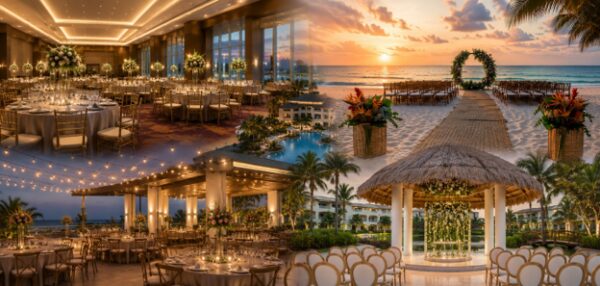
 You already know what kind of wedding you want. What most couples don’t know is whether the resort they’re considering can actually deliver it.
A resort that photographs beautifully can still struggle with Indian food execution, guest flow, venue logistics, vendor flexibility, or large-scale wedding operations. And a resort that says “yes” to everything during the sales process can still surprise you with restrictions, hidden fees, or operational challenges later.
Among the wedding venues for South Asian weddings in Mexico or in the Caribbean, the same principle applies: Choosing a destination narrows your options. Choosing the right resort determines the experience you’ll actually have once you get there.
The best wedding resorts are not necessarily the newest, most popular, or most photographed. They are the resorts that can successfully execute your guest experience, food program, venue plan, baraat, and wedding week from beginning to end.
We’ve been planning Indian destination weddings in Mexico and the Caribbean since 1996 and have seen firsthand what separates resorts that consistently execute Indian weddings at a high level from those that do not.
This guide is built on that experience.
Inside, you’ll find a practical framework for evaluating destination wedding venues the way experienced professionals do, including the questions, criteria, and warning signs most couples never think to ask.
We call it the Indian Destination Wedding Resort Scorecard.
Quick Overview: The Indian Destination Wedding Resort Scorecard™
| Evaluation Category | Why It Matters |
| Experience & Expertise | Determines whether the resort can confidently execute Indian wedding traditions, timelines, and logistics. |
| Food & Catering | One of the biggest drivers of guest satisfaction. Look beyond menus to culinary experience and execution. |
| Venues & Event Spaces | Every event should feel distinct while comfortably accommodating your guest count and vision. |
| Guest Experience | Walking distances, transportation, accessibility, and resort layout directly affect your guests’ enjoyment. |
| Resort Policies | Vendor rules, sound restrictions, and exclusivity policies can dramatically affect your plans and budget. |
| Wedding Team | An experienced coordinator can prevent problems long before they happen. |
| Logistics & Operations | Transportation, weather plans, setup windows, and event flow determine how smoothly the week unfolds. |
| Value & Cost | Compare total value, not just package pricing or room rates. |
The Indian Destination Wedding Resort Scorecard
Most couples evaluate wedding resorts based on photos, room categories, and price. Experienced professionals evaluate them differently.To help you compare destination wedding venues more objectively, we recommend scoring resorts across nine categories that impact the success of Indian destination weddings.
Score each category from 1 to 10, with 10 being exceptional.
How to Interpret Your Score
80–90 PointsAn excellent fit offering a strong Indian wedding experience, venue variety, food execution, guest-friendly layouts, and proven operational capabilities.
70–79 Points
A strong option with a few areas that deserve closer review. Many couples still find these resorts to be an excellent fit depending on their priorities.
60–69 Points
A potential fit, but there are likely some limitations to carefully evaluate before moving forward.
Below 60 Points
Careful! The resort may still be beautiful, but operational, logistical, or experience-related challenges could impact your wedding week.
Most resorts fall somewhere between 60 and 80, which is why understanding where a resort is strong and where it may have limitations is often more important than the final score itself.
Category #1: Indian Wedding Experience (1–10 Points)
Evaluate:
- Number of Indian weddings hosted annually
- Dedicated Indian wedding specialists
- Experience with multi-day celebrations
- Familiarity with Indian wedding traditions
Category #2: Venue Variety (1–10 Points)
Evaluate:
- Number of event spaces
- Distinctiveness of venues
- Indoor and outdoor options
- Event flow between venues
- Ability to keep events feeling unique
Category #3: Baraat Logistics (1–10 Points)
Evaluate:
- Procession routes
- Sound restrictions
- Specialty entrance options
- Guest viewing experience
- Weather contingency plans
Category #4: Food Execution (1–10 Points)
Evaluate:
- Indian chefs
- Menu quality and flexibility
- Regional cuisine options
- Vegetarian, vegan, and Jain accommodations
Category #5: Guest Experience (1–10 Points)
Evaluate:
- Ease of navigation
- Venue proximity
- Resort layout
- Accessibility
- Overall comfort
Category #6: Privacy (1–10 Points)
Evaluate:
- Venue exclusivity
- Simultaneous weddings
- Public visibility during events
- Venue separation
Category #7: Vendor Flexibility (1–10 Points)
Evaluate:
- Outside vendor policies
- Vendor fees
- Vendor restrictions
- Approved vendor requirements
Category #8: Large Guest Capability (1–10 Points)
Evaluate:
- Room inventory
- Event capacities
- Group dining capabilities
- Transportation logistics
- Check-in experience
Category #9: Construction & Renovation Risk (1–10 Points)
Evaluate:
- Active construction
- Planned renovations
- Closed facilities
- Beach access disruptions
- Project completion timelines
What a 90-Point Resort Looks Like
A resort scoring 90 or higher has extensive Indian wedding experience, strong venue variety, executes Indian food at a high level, accommodates large guest counts comfortably, and creates a seamless experience for both couples and guests.
What a 60-Point Resort Looks Like
A resort scoring around 60 may look beautiful, but it often has noticeable weaknesses in areas like venue variety, food execution, guest flow, vendor flexibility, or Indian wedding experience.
Save This Scorecard Before Touring Resorts
As you compare wedding resorts throughout Mexico and the Caribbean, use the scorecard to compare resorts side by side. By evaluating every property using the same framework, you’ll focus on the factors that actually influence the success of an Indian destination wedding.
Not Every Resort Executes Indian Weddings at the Same Level
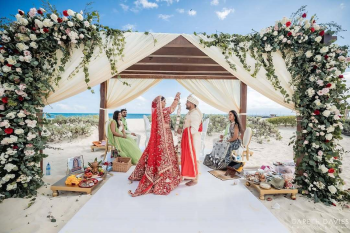
South Asian destination weddings have exploded in popularity across Mexico and the Caribbean, and more wedding resorts and destination wedding venues than ever are eager to host them. That’s good news for couples, but it also means the gap between resorts isn’t always obvious.
The question is no longer whether a resort has hosted Indian weddings. It’s whether they’ve done them well, consistently, and at the level of complexity your wedding actually requires.
Whether you’re evaluating destination wedding venues in Mexico in popular places like Cancun, Riviera Maya, Los Cabos or in the Caribbean, it all comes down to this: experience matters.
Why Experience Matters
Indian weddings are often discussed as though they are a single category of wedding. In reality, they encompass a tremendous range of traditions, cultures, languages, religions, family expectations, and event structures.
A resort’s experience matters because it determines how well the team can adapt to those differences rather than applying the same approach to every wedding.
The strongest resorts understand that no two Indian weddings are exactly alike. They know how to ask questions how to ask the right questions early in the planning process, identify requirements early, and adjust their planning approach based on the traditions, priorities, and personalities of the families involved.
Breadth of Experience Matters More Than Volume Alone
Hosting a large number of Indian weddings is valuable, but volume alone does not tell the whole story. Some resorts have experience with a narrow range of celebrations that follow a similar structure year after year.
Others have worked with couples with different cultural backgrounds, religious backgrounds, family traditions, or event formats. That breadth of experience often matters more than the raw number of weddings hosted.
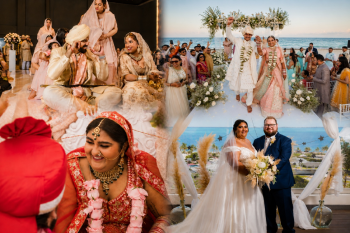
Planet Hollywood Cancun is a good example. Over the years, we’ve planned a wide variety of celebrations there, including Angel and Gautam’s traditional Sikh wedding, Priyanka and Varun’s Hindu wedding, and Nikki and Cody’s multicultural celebration featuring both a Western ceremony and a Hindu ceremony.
Three different weddings but each at the same resort. Experiences like these help a resort build the operational knowledge needed to confidently accommodate different traditions, timelines, and family expectations.
One of the biggest differences between experienced and inexperienced resorts is not the answers they provide. It’s the questions they ask.
Experienced teams know what information they need early because they have seen how seemingly small details can affect wedding execution later. They ask about guest counts, family dynamics, ceremony requirements, vendor plans, food preferences, event flow, and special traditions because they understand how those decisions shape the overall wedding experience.
Experience becomes most valuable when something unexpected happens. Rain forces a venue change. A flight delay affects key members of the wedding party. Guest counts increase. A family requests a last-minute adjustment to the ceremony timeline.
A baraat route needs to be modified. Resorts that have navigated a wide variety of situations tend to respond more confidently because they have already solved similar challenges before.
The strongest resorts are not simply reacting to requests. They are anticipating needs, identifying potential issues before they become problems, and helping couples make informed decisions throughout the planning process.
Signs a Resort Truly Understands Indian Weddings
A Dedicated Indian Wedding Team
Not a generic wedding coordinator who has handled a few Indian events, but a team, or at minimum a coordinator, whose primary focus is South Asian weddings.
Cultural Familiarity That Goes Beyond the Basics
A solid resort understands that different families have different traditions, that a Gujarati wedding may have different priorities than a Punjabi wedding, and that the timing and sequencing of events isn’t arbitrary.
Event Coordination That Assumes Complexity
Experienced resorts think in terms of venue transitions, turnaround times, simultaneous setups, weather contingencies, and guest flow across the entire wedding week.
Operational Confidence You Can Feel
When a resort truly understands Indian weddings, the conversation feels different. Answers come quickly and specifically. They volunteer information you haven’t asked for yet and can explain what has worked successfully in the past.
A Proven Indian Wedding Track Record
A resort should be able to show evidence that the resort regularly hosts weddings of a similar size and complexity to your own. Real wedding galleries, videos, testimonials, and case studies can often tell you far more than a sales brochure.
Questions to Ask Before Booking
Use the following questions to help score this category:
- How many Indian or South Asian weddings do you host each year?
- Can you walk us through a typical Indian wedding week at your property?
- Who specifically would be our point of contact, and what is their experience with South Asian weddings?
- Do you have a dedicated South Asian wedding team or coordinator?
- Can you share examples, photos, videos, or references from recent Indian weddings at your resort?
- What is the most common challenge you encounter with Indian weddings, and how do you typically handle it?
- What relationships do you have with Indian catering vendors, decorators, DJs, MCs, and dhol players?
Can the Resort Keep Every Event Feeling Distinct?
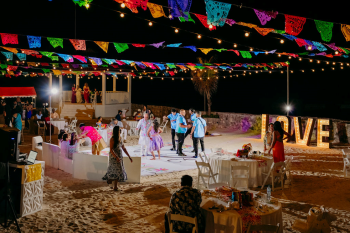
Malena and Eshwar used both Generations Riviera Maya and El Dorado Royale for an oceanfront sangeet, tropical haldi, pier ceremony, and rooftop reception, creating four completely different event experiences without moving guests to another resort.
One of the biggest mistakes couples make when comparing destination wedding venues is assuming that more venues automatically means more variety.
That’s not always true.
A resort may advertise six or seven event spaces, but if several of those venues have similar views, layouts, and atmospheres, your events can start to feel repetitive.
One of the reasons South Asian destination weddings are so memorable is that each event has its own personality and energy. The welcome party should feel different from the sangeet. The sangeet should feel different from the ceremony. The ceremony should feel different from the reception.
When evaluating wedding resorts in Mexico and the Caribbean, see if those venues are truly different from one another and whether they can support the experience you’re trying to create. In some cases, you can expand your options even further by choosing sister resorts that share wedding venues or allow guests to move easily between properties.
Two such resorts are Generations Riviera Maya which is a family-friendly resort and El Dorado Royale which is adults-only. Both are part of the Karisma brand and guests 18 and older can access the amenities and restaurants at El Dorado Royale.
For weddings, children are allowed at El Dorado Royale to attend wedding events. Malena and Eshwar’s wedding at Generations Riviera Maya and El Dorado Royale is a great example of how neighboring sister resorts can provide a wider variety of venues and event experiences while still keeping guests together throughout the celebration. They had an oceanfront sangeet by a gazebo, a haldi ceremony in a tropical garden terrace, their ceremony on an open-air pier deck with ocean views, and a rooftop reception.
How to Tell Whether Venue Options Are Genuinely Different
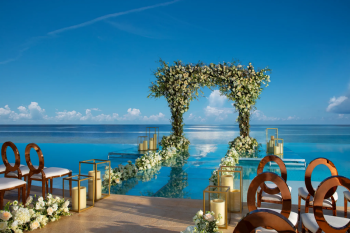
Ask yourself whether each venue offers a genuinely different guest experience.
Scenery
Does each venue provide a genuinely different backdrop, such as a beach, garden, rooftop, terrace, or ballroom?
Atmosphere
How does each venue feel emotionally? A beach ceremony creates a different atmosphere than an elegant ballroom reception or a lively rooftop celebration. Look beyond the physical space and consider the mood each venue creates.
Layout
Can each venue support the flow of the event you’re planning?
Some venues work beautifully for a ceremony but feel restrictive for a sangeet. Others may be perfect for a reception but lack the intimacy couples often want for smaller gatherings.
Guest Perception
If your guests looked at photos from each event, would they immediately recognize that they took place in different locations?
Event Energy
Different events require different energy levels.
A relaxed welcome party, a vibrant sangeet, a meaningful ceremony, and an energetic reception should not all feel like they belong in the same setting.
The Four-Event Test
One of the easiest ways to evaluate destination wedding venues is to apply what we call the Four-Event Test.
Imagine hosting your:
- Welcome party/Haldi
- Sangeet
- Ceremony
- Reception
at the resort.
Now ask yourself:
- Would each event feel visually and emotionally different?
- Could guests immediately tell they were attending a new experience?
- Would the photos from each event look distinct without relying entirely on décor?
If the answer is yes, the resort likely has strong venue variety.
If the answer is no, you may want to look more closely at the available spaces.
How Strong Is the Resort’s Weather Backup Strategy?
Many couples fall in love with outdoor venues without asking what happens if the weather doesn’t cooperate. A resort’s backup plan can have a major impact on the success of your wedding week.
Indoor Backup Venues
The quality of a weather backup plan depends heavily on the backup venue itself. Some indoor spaces feel every bit as special as the primary venue, while others feel like a compromise.Consider whether the backup location can comfortably accommodate your guest count and maintain the atmosphere you want for your wedding.
Capacity Differences
Some outdoor venues can comfortably accommodate hundreds of guests, while the backup venue may have significantly lower capacity. Understanding these limitations in advance can help avoid surprises later.
Last-Minute Weather Plans
A strong weather contingency plan includes more than a backup venue. It also includes a clear process for making weather-related decisions and implementing alternative plans when conditions change.
The strongest resorts can clearly explain who makes those decisions, how the process works, and what alternatives are available if a venue change becomes necessary.
Questions to Ask Before Booking
Use the following questions to help score this category:
- How many unique event venues does the resort offer?
- Can each major event take place in a visually distinct location?
- What venues work best for welcome parties, sangeets, ceremonies, and receptions?
- Are there any restrictions on which venues can be used together?
- What are the indoor backup options for each venue?
- Can we see photos of real weddings that used these venues?
- How does the resort handle weather-related venue changes?
- Have previous couples ever had to modify their venue selections because of weather or operational limitations?
Can the Resort Accommodate a Baraat?
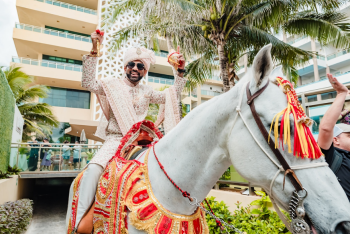
Many wedding resorts in Mexico and the Caribbean have experience hosting baraats as part of South Asian destination weddings. What varies between resorts is how each executes the experience.
The route, guest flow, sound policies, venue layout, and weather contingency plans can all have a significant impact on how the procession feels for both the couple and their guests.
A resort may have stunning venues and beautiful guest rooms, but if the baraat route is too short, heavily restricted, difficult to navigate, or poorly designed for guest participation, it can significantly affect the experience.
Evaluating the Baraat Route
The first question isn’t whether the resort allows baraats. It’s whether the resort has a route that actually works.
We recommend that you walk the exact route you will use. Look at where the procession starts, how guests will move through the property, where the ceremony entrance takes place, and whether the route feels natural and exciting.
Route Length and Guest Experience
The goal is not finding the longest baraat route. The goal is creating the best guest experience.
A strong baraat route provides enough time for guests to dance, celebrate, and build excitement before the ceremony without becoming uncomfortable in the heat and humidity.
The best routes feel energetic, encourage participation, create a memorable entrance, and build anticipation as guests approach the ceremony venue.
Sound Restrictions and Resort Policies
Every resort has different policies regarding music, amplified sound, and the use of public spaces.
Some resorts have extensive experience coordinating baraats and can comfortably accommodate dhol players, mobile sound systems, DJs, and live entertainment. Others impose restrictions that may affect the route, sound levels, timing, or overall atmosphere of the procession.
Understanding those policies in advance is important because they can significantly influence the energy and guest experience of the baraat.
Horses, Vintage Cars, and Specialty Entrances
Many couples envision a memorable entrance as part of the baraat experience.
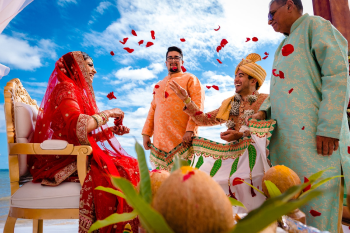
Some resorts allow horses, vintage cars, luxury vehicles, or other specialty transportation. Others prohibit them due to safety concerns, property design, or operational restrictions. For example, at Angel and Nico’s wedding at Grand Paladium Cost Mujeres, Nico and his groomsmen arrived by boat before greeting everyone and dancing on the palm-tree lined path leading to the ceremony.
You should know what is permitted at the specific resort you’re considering and whether any additional approvals or fees apply.
Weather Backup Plans
Most couples think about weather backup plans for ceremonies. Far fewer consider what happens if weather affects the baraat.
A strong contingency plan includes an alternative route or a clearly defined process for adapting the procession if heavy rain, strong winds, or other unsafe conditions make the original route unusable. The strongest resorts can make those adjustments quickly while preserving the energy and guest experience of the baraat.
Guest Viewing and Crowd Flow
A great baraat creates energy for both participants and spectators.
Consider where guests will stand, how they will move through the property, and whether everyone can comfortably see what is happening.
Strong crowd flow creates excitement and allows guests to participate, take photos, and transition smoothly into the ceremony.
Questions to Ask Before Booking
- What baraat routes are available at the resort?
- Can we see the exact route that would be used for our wedding?
- How long does a typical baraat take at your property?
- Are dhol players allowed throughout the entire route?
- Are there any sound restrictions or quiet zones?
- Are horses, vintage cars, luxury vehicles, or specialty entrances permitted?
- What weather backup plans are available if the route becomes unusable?
- How do you manage guest flow during larger baraats?
- What is the largest baraat the resort has successfully hosted?
- Can you share examples of recent baraats held at the property?
Don’t Assume Every Resort Executes Indian Food Well
Food is one of the most important guest experience factors in South Asian destination weddings, and one of the topics families care about most.
Many wedding resorts in Mexico and the Caribbean offer Indian wedding menus. What varies is the depth of culinary expertise behind those menus. Knowing the difference before you book is one of the most important evaluations you will make when comparing Indian wedding venues.
Across wedding resorts in Mexico and in Caribbean islands such as the Dominican Republic, Jamaica, or Aruba, the same principle applies: food execution matters.
The goal isn’t simply finding a resort with Indian food. It’s finding a resort that can deliver the quality, consistency, and variety your guests will remember long after the wedding is over.
Does the Resort Have Dedicated Indian Chefs?
Some resorts employ dedicated Indian chefs year-round or bring in outside culinary talent for weddings.
Neither approach is automatically better, but the answer reveals a great deal about the resort’s culinary program.
Dedicated Indian chefs often have extensive experience working within that resort’s kitchens, systems, and service model. Resorts that bring in outside talent may rely on excellent chefs, but additional coordination is often required.
Resorts that regularly host South Asian destination weddings often develop stronger culinary systems, greater consistency, and more experience serving large groups across multiple days of events.
Can They Deliver Multiple Days of Distinct Menus?
A single well-executed Indian dinner is one thing. Four or five days of Indian cuisine across multiple events is something entirely different.
The challenge isn’t simply preparing Indian food. It’s creating distinct dining experiences throughout the wedding week without guests feeling like they’re seeing the same dishes repeatedly.
A resort should be able to create multiple distinct dining experiences throughout the wedding week without guests feeling like they are eating variations of the same meal.
When evaluating a resort’s culinary capabilities, request to see sample menus from previous Indian weddings, not simply a general Indian wedding menu.
Look for variety across:
- Event types
- Meal periods
- Days of the celebration
- Flavor profiles
- Dining experiences
Regional Cuisine Considerations
Indian cuisine encompasses a wide range of regional culinary traditions, each with its own flavors, ingredients, cooking techniques, and expectations. For example, a Punjabi wedding has different culinary priorities than a Gujarati wedding.
When discussing food with the resort’s culinary team, evaluate how comfortably they can speak about your family’s preferred cuisine and dietary requirements.
Experienced teams can typically discuss regional cuisines such as Gujarati, Punjabi, Malyali and Tamil menus in detail, while also explaining how they accommodate Jain, vegetarian, and vegan requirements. The depth and specificity of those conversations often reveal more than a sample menu alone.
Vegetarian, Vegan, and Jain Requirements
Many Indian weddings include guests with dietary requirements that require a higher level of planning and awareness than a typical wedding.
Vegetarian, vegan, and Jain requirements often involve more than simply offering alternative dishes. Cross-contamination, preparation procedures, and consistency all matter.
The strongest resorts have clear processes for accommodating Jain meals, communicating dietary requirements, and maintaining consistency across multiple events throughout the wedding week.
Questions to Ask Before Booking
Use the following questions to help score this category on your Indian Destination Wedding Resort Scorecard:
- Do you employ dedicated Indian chefs year-round, or do you bring in culinary talent specifically for Indian weddings?
- Can you share sample menus from recent Indian weddings that show variety across multiple days and event types?
- How do you approach menu planning to ensure each event feels culinarily distinct?
- What is your culinary team’s experience with regional Indian cuisines?
- How do you handle Jain dietary requirements and prevent cross-contamination?
- Can you accommodate vegetarian, vegan, and regional dietary preferences?
- Can we arrange a tasting that includes dishes from multiple meal types and event formats?
- How does your culinary team incorporate feedback from tastings into final menu planning?
- What systems are in place to ensure dietary requirements are consistently honored across all wedding events?
How to Audit a Resort’s Layout Like a Professional
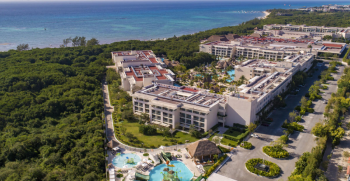
Most couples evaluate wedding resorts as guests. Experienced planners evaluate them through the lens of logistics.
A guest notices the ocean view, the ballroom, and the ceremony setup. A planner notices walking distances, transportation bottlenecks, accessibility concerns, and how easily hundreds of guests can move between events.
For destination wedding resorts hosting multi-day Indian celebrations, resort layout can influence the guest experience as much as the venues themselves.
Walkability Matters More Than Most Couples Realize
Large resorts mean distance, and distance influences punctuality, guest energy, and how often people naturally interact between events.
What feels like a pleasant walk during a site visit can feel very different late at night after a sangeet or early in the morning before a mehndi. Request actual walking times between guest room buildings and event venues, then evaluate those distances through the lens of your oldest or least mobile guests.
When Golf Carts Become a Problem
Golf carts are often presented as the solution to resort walkability challenges.
They are not always a reliable one when 200 guests all need transportation at the same time.
After a sangeet ends and guests want to return to their rooms, or when a ceremony is about to begin and guests need to travel from the pool area to the beach, demand for transportation spikes simultaneously. Most resorts do not have enough carts to meet that demand efficiently.
Assess whether the resort has sufficient transportation resources to support your guest count during peak periods and whether those systems can accommodate elderly relatives, guests with mobility needs, and families traveling with young children.
Accessibility for Elderly Relatives.
Evaluate the resort specifically through the lens of an elderly guest.
Consider the condition of pathways, the presence of stairs, the availability of elevators or ramps, and the distances between guest rooms, restaurants, and event venues. Ground-floor accommodations and accessible room options can also have a significant impact on the guest experience for relatives with mobility limitations.
The strongest wedding resorts make it easy for guests of all ages and mobility levels to participate comfortably throughout the wedding week.
Moving 200 Guests Between Events
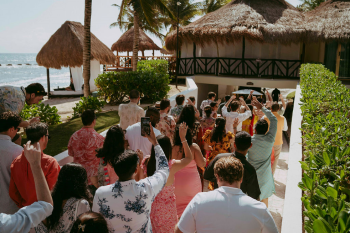
Many couples underestimate how long it takes to move a large group between venues. What feels simple for 20 people can become much more complicated when 200 guests are involved.
Successful transitions depend on clear wayfinding, adequate pathway capacity, accessible transportation options, and realistic timing between events. Experienced wedding resorts understand where bottlenecks occur and have systems in place to keep guests moving smoothly without making the experience feel overly structured or rushed.
Follow the Guest Journey From Start to Finish
One simple exercise that reveals logistical challenges that don’t appear in resort brochures, wedding galleries, or site maps is to think like a guest.
When possible, walk these transitions during your site visit instead of reviewing them on a map:
Check-In
- Where do guests arrive?
- How long does check-in take when a large group arrives within a short window?
- Is the lobby large enough to comfortably absorb dozens of arrivals at once?
- Where do guests wait if rooms are not yet ready?
- Is a hospitality suite available?
Welcome Event
- How easily can guests find the venue?
- Does the location encourage mingling and interaction?
Mehndi
- How far is the venue from guest rooms?
- Will guests need transportation?
- Is the space comfortable for extended seating and socializing?
- If the mehndi is scheduled immediately before another event, how easy is it for guests to transition between venues?
Haldi
- How far is the haldi venue from guest room buildings?
- Will guests need transportation?
- How easy is it for guests to return to their rooms afterward?
Sangeet
- Where is the sangeet venue relative to the guest room buildings?
- Is the route back to guest rooms safe and well-lit?
Ceremony
- How easily can guests access the venue in formal attire?
- How easily can elderly relatives access the space?
Reception
- How smoothly do guests transition from ceremony to cocktail hour to reception?
Resort Layout Red Flags
A resort layout that looks ideal during a site visit can feel very different if a key pathway, restaurant, guest room building, or event area is unavailable during your wedding week.
Watch for:
- Event venues that require guests to pass through busy public resort areas
- Guest room buildings located far from primary event venues
- Heavy reliance on limited golf cart transportation
- Long walking distances between major venues
- Accessibility concerns for elderly guests
- Shared pathways between multiple weddings or group events
- Frequent transportation bottlenecks
- Significant elevation changes between venues
- Areas of the resort that are currently closed, undergoing renovation, or expected to change before your wedding dates.
Questions to Ask Before Booking
Use the following questions to help score this category on your Indian Destination Wedding Resort Scorecard:
- What are the actual walking distances and times between the main guest room buildings and each event venue?
- How many golf carts are available for guest transportation during wedding events?
- How do you manage transportation demand at the end of large events?
- What accommodations are available for elderly guests and guests with limited mobility?
- Are all primary pathways paved, even, and well-lit?
- How do you handle large group arrivals and check-in?
- Is there a hospitality space available for early arrivals?
- How do you manage large group transitions between events?
- Are any areas of the resort currently closed or undergoing renovation?
- How do you handle multiple large events occurring on the same day?
- Can you walk us through the complete guest journey from check-in through each of our planned events?
Can the Resort Handle Your Guest Count Without Feeling Overwhelmed?
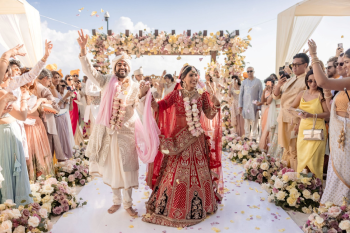
A resort can have enough rooms and event space to host your wedding and still struggle to deliver a great guest experience.
The real question is not whether the resort can accommodate your guest count on paper. It’s whether it can comfortably absorb your group while maintaining strong service, efficient operations, and a positive guest experience throughout the wedding week.
Can Guests Stay Together?
Large resorts often span multiple buildings or sections, which can leave wedding guests more dispersed than couples initially expect.
The strongest wedding resorts can keep a significant portion of the group reasonably close together and within convenient proximity to the primary event venues, creating a more connected guest experience throughout the wedding week.
Check-In Experience
Two hundred guests arriving within a few hours of each other is a stress test for any resort’s front desk operation. How a resort handles that moment sets the tone for your entire wedding week.
Experienced wedding resorts have dedicated procedures for large groups, including streamlined arrivals, coordinated room assignments, and staff specifically assigned to support wedding guests. Their systems are designed to keep the process efficient even when hundreds of guests arrive within a short period of time.
Restaurant Capacity
An all-inclusive resort with multiple restaurants can still struggle when a large wedding group arrives at the same time.
Ask how the resort manages restaurant capacity during large wedding weeks and whether wedding groups receive reserved sections, priority reservations, or dedicated dining periods.
Also, clarify how many other large groups will be on property during your wedding week and how that may affect dining availability.
Can the Resort Handle Group Dining?
Beyond individual restaurant visits, Indian weddings often require the resort to execute large group dining experiences that go well beyond standard event catering.
Indian weddings involve informal group meals that fall outside the formal event schedule. A resort’s ability to accommodate these gatherings can reveal a lot about its operational flexibility.
Large-Group Reservations
Informal group meals are often an important part of the wedding week, particularly when guests want to gather between scheduled events.
Evaluate whether the resort’s restaurants can comfortably accommodate larger groups and how easily the resort can coordinate those arrangements. The strongest wedding resorts have established processes for managing group dining without creating unnecessary logistical challenges for guests.
Event Capacity
Venue capacity numbers deserve more scrutiny than most couples give them.
A ballroom listed at 300-person capacity is typically measured at maximum density with minimal décor. Capacity charts rarely account for the realities of South Asian destination weddings, where stages, entertainment, lounge furniture, mandaps, and elaborate décor installations all consume usable space.
Add a dance floor, a stage for the DJ and live performers, a mandap, a photo booth, lounge seating areas, and the elaborate floral and lighting installations often found at Indian weddings, and that 300-person room can feel tight for 220 guests.
The comfortable capacity of each venue with a typical Indian wedding setup, not the maximum technical capacity, matters. That’s why it’s important to see photos and videos from real Indian weddings at various guest counts so you can gauge whether the space feels right for your vision, guest count, and event design.
Our Indian destination wedding client videos offer a behind-the-scenes look at how different venues actually function when they’re filled with guests, décor, entertainment, and the energy of a real celebration.
Make sure the resort is evaluating capacity for your events based on your specific events rather than a venue’s maximum occupancy number.
A ceremony, sangeet, reception, cocktail hour, and seated dinner all have different space requirements. Layout, guest comfort, entertainment, décor, and event flow can significantly affect how well a venue accommodates a particular guest count.
Questions to Ask Before Booking
Use the following questions to help score this category on your Indian Destination Wedding Resort Scorecard:
- How many rooms are realistically available during our wedding dates?
- Can our full guest list comfortably stay on property?
- Can guests be concentrated within a specific section or building?
- What percentage of guests at comparable Indian weddings stayed on property versus overflow accommodations?
- How do you manage group check-ins for large Indian wedding groups?
- How long does a group check-in typically take?
- How do you manage restaurant capacity during large wedding weeks?
- Are restaurant buyouts available for informal group dining?
- What is the comfortable capacity of each of our event venues with a full Indian wedding setup?
- How many other large groups or events will be on property during our wedding week?
- Can you show us photos of Indian weddings at our approximate guest count?
- What is the capacity for each specific event type we are planning?
Outside Vendor Policies Can Make or Break Your Wedding
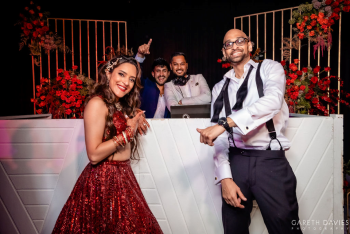
The resort you choose is not just a venue. It is a gatekeeper, and its vendor policies determine how much creative control you actually have over your wedding.
Outside vendor policies are one of the most consequential and least discussed aspects of resort selection for South Asian destination weddings. Some resorts are highly flexible. Others place restrictions on outside photographers, videographers, decorators, DJs, MCs, dhol players, and production teams or charge fees that can significantly affect the budget.
Photographer Policies
Most resorts permit outside photographers, but the conditions under which they operate vary significantly. Some resorts charge vendor access fees, restrict access to certain areas, or require photographers to coordinate through the resort’s in-house photography department.
The resort should tell you whether your photographer will have unrestricted access to all event venues, whether there are time restrictions, and whether using an outside photographer affects any part of your wedding package.
Videographer Policies
Videographer policies often mirror photographer policies but introduce one additional consideration that matters heavily for South Asian destination weddings: drone footage.
Many resorts have restrictions related to drone usage, guest privacy, or local regulations. If aerial footage is important to you, ask for the drone policy in writing and confirm whether the resort has experience coordinating drone flights for Indian weddings specifically. Inquire about any restrictions on audio recording equipment or microphone placement, particularly for ceremonies, live entertainment, and dhol performances.
DJ, MC, and Dhol Player Policies
This is where outside vendor policies most directly affect the guest experience at a South Asian destination wedding, and where the gap between resorts becomes most visible. This is also where many couples encounter restrictions involving Indian wedding entertainment.
Entertainment plays a central role in the energy and guest experience of a South Asian destination wedding, making vendor policies especially important.
Some resorts have flexible policies that accommodate outside DJs, MCs, dhol players, and entertainment teams with minimal restrictions. Others impose vendor fees, approved vendor requirements, sound limitations, or equipment restrictions that can affect both planning flexibility and event execution. If a resort has an approved vendor lists, they may or may not allow using outside talent not on that list is permitted. For dhol players, clarify whether different rules apply for outdoor baraats versus indoor events.
Decor and Production Policies
Indian weddings often involve elaborate décor and production elements that extend beyond standard resort wedding packages.
If you are considering outside decorators and production companies, you should know if the resort permits them. Your resort may have an approved vendor list and it is worth asking if decorators not on that list are allowed. Check to see if setup and breakdown windows are sufficient for the scale of your wedding.
There may also be restrictions related to hanging installations, staging, lighting, specialty effects, and load-in logistics. These operational details can significantly affect both feasibility and production costs.
Hidden Vendor Fees
Vendor fees are one of the least transparent costs in destination wedding planning.
Some resorts charge flat access fees per vendor. Others charge per vendor per day, a percentage of the vendor contract, or a combination of multiple fee structures.
Across a multi-day Indian wedding, those costs can become substantial which is why you should clarify whether fees apply per vendor, per event day, or per wedding. Do not rely on verbal explanations alone and ensure that the details are in writing.
Questions to Ask Before Booking
Use the following questions to help score this category on your Indian Destination Wedding Resort Scorecard:
- Do you permit outside photographers and videographers, and what are the associated fees and access conditions?
- What is your drone policy, and have you coordinated drone flights for Indian wedding videography before?
- Do you permit outside DJs, MCs, and dhol players, and what are the fees for each?
- Is there an approved vendor list for entertainment, and are couples required to use it or permitted to bring outside talent?
- Do you permit outside decorators and production companies, and what are the setup, breakdown, and cleanup requirements?
- Can you give a written breakdown of all vendor fees that would apply to our wedding?
- Are vendor fees charged per vendor per day or per vendor per wedding?
- What are the load-in logistics for outside production vendors, including property access, parking, and transport to event venues?
- Are there any restrictions on what outside vendors can attach to, hang from, or place on resort structures?
- How many Indian wedding specialists are represented on your approved vendor list, and what is their experience with South Asian weddings at this property?
Privacy Matters More Than Most Couples Think
Privacy is one of the biggest differences between destination wedding venues that appear similar on paper. Two wedding resorts may offer beautiful beaches, elegant ballrooms, and experienced wedding teams yet deliver completely different guest experiences because of how private their event spaces actually are.
Across resorts in Mexico and popular Caribbean islands like the Bahamas, St. Lucia, or Turks and Caicos, privacy deserves the same level of attention as venue capacity, food quality, and guest experience.
How Many Weddings Are Taking Place at the Same Time?
Many wedding resorts host multiple weddings simultaneously, particularly during peak wedding seasons. The question is not whether the resort can host multiple events. The question is whether each wedding still feels distinct, intentional, and well supported when several celebrations are happening at once.
For South Asian destination weddings, this can affect everything from staffing and logistics to venue separation, sound management, and guest experience.
Ask how many weddings are typically hosted on a given weekend, whether any other large groups will be on property during your dates, and how the resort manages overlapping events.
Shared Spaces vs Private Spaces
Some venues are genuinely private and separated from general resort activity. Others remain partially visible or accessible to guests who are not part of your wedding.
A beach ceremony may share space with resort guests. A rooftop reception may be visible from nearby rooms. A garden cocktail hour may sit adjacent to public pathways.
None of these situations is automatically a problem, but understanding the level of privacy before booking helps ensure the resort aligns with your vision.
Ask which venues are fully private, which have exposure to general resort traffic, and what measures can be taken to create additional separation.
Ceremony, Reception and Noise Considerations
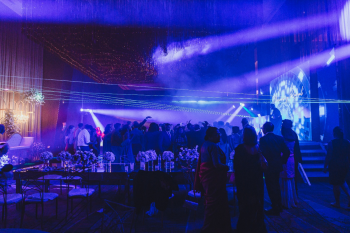
Privacy affects more than who can see your wedding. It also influences how freely your events can operate.
For ceremonies, consider whether resort guests are likely to pass near the venue during the event and whether the space has natural or constructed boundaries that create separation from the rest of the property. Photos and videos from real weddings held in the venue can often provide a more realistic picture of privacy than marketing materials.
For receptions, evaluate the venue’s proximity to guest room buildings and public resort areas. A high-energy Indian wedding reception with a DJ, dhol player, dance floor, and hundreds of guests generates significant sound. If the venue sits too close to sleeping guests, noise complaints can lead to volume restrictions or earlier event end times.
Most wedding resorts in Mexico and the Caribbean have policies related to sound levels, event end times, and where amplified music may be used. Some restrictions are driven by local regulations, while others are internal resort policies.
When evaluating a resort, review its noise policies, event curfews, and reception venue locations. The strongest resorts have event spaces designed to support large celebrations while minimizing disruption to the rest of the property.
Questions to Ask Before Booking
Use the following questions to help score this category on your Indian Destination Wedding Resort Scorecard:
- How many weddings or large events do you typically host simultaneously on a weekend, and specifically on the dates we are considering?
- Will any other large groups, corporate events, or weddings be on property during our wedding week?
- Which of our planned venues are fully private and which have exposure to general resort traffic or sightlines?
- What measures can you take to restrict access to areas adjacent to our ceremony and reception venues during our events?
- Where do the reception venue and other event spaces sit in relation to guest room buildings, and what is the typical noise impact?
- What is your policy when noise complaints are received during a wedding reception, and who has authority to impose restrictions?
- Can a guaranteed sound level and event end time be written into our contract?
- What are your standard event end times and what are the options for late-night extensions?
- Can you provide your complete noise restriction policy in writing, including any municipal regulations that apply?
- Has a noise restriction ever been imposed on an Indian wedding event mid-celebration, and how was that situation handled?
- Have there been occasions where two Indian weddings were taking place on the property at the same time, and how were venue separation and guest experience managed?
Resort Red Flags Most Couples Miss
Most wedding problems do not appear out of nowhere. They are often visible during the resort evaluation process if you know what to look for.
Think of this section as a destination wedding venue checklist designed to help you identify potential problems before they become expensive surprises.
Whether no matter where in Mexico or the Caribbean you are considering, the same principle applies: beautiful resorts can still have operational weaknesses that affect your wedding experience.
Beautiful Photos but Weak Logistics
A resort’s visual appeal and operational capability are two entirely different things.
Watch for resorts whose marketing materials are impressive but whose answers to logistical questions are vague, inconsistent, or overly reliant on reassurance rather than specifics.
Strong resorts can explain exactly how they handle guest transportation, venue transitions, weather contingencies, and event logistics. Specific answers often tell you far more than beautiful photography ever will.
Limited Venue Variety
Watch for resorts that present venue variety through multiple setups of the same space rather than genuinely different environments. A ballroom configured three different ways is still one venue.
Likewise, several venues along the same beachfront corridor may technically be different spaces while creating nearly identical guest experiences.
The question is not how many venues a resort offers. The question is whether those venues feel genuinely distinct.
Excessive Vendor Fees
Vendor fees are a legitimate part of how resorts manage outside vendor access. Excessive vendor fees are something different.
Watch for fee structures that make bringing your own photographer, videographer, decorator, DJ, MC, or dhol player financially impractical without a clearly articulated reason for the pricing.
If the vendor fee for a single outside entertainment professional approaches the cost of hiring that professional, the resort is effectively discouraging outside vendors.
Also watch for fee structures that are difficult to obtain in writing during the sales process.
Transparent resorts provide vendor policies early; less transparent resorts ask you to review those details later.
Poor Food Execution
The signs of weak Indian food execution often appear long before the tasting. Watch for resorts that describe their Indian food capability in terms of availability rather than quality. “We can do Indian food” is not the same statement as “our culinary team executes dozens of multi-day Indian weddings each year.”
Be wary of resorts that cannot provide sample menus, accommodate tastings, or discuss regional cuisines and dietary requirements with confidence.
Difficult Resort Layouts
Layout problems are among the hardest issues to identify from photos and among the most impactful on guest experience.
Warning signs include:
- Excessive distances between guest rooms and event venues
- Event spaces that require guests to pass through crowded public areas
- Transportation systems that may struggle to support 150 or 200 wedding guests moving simultaneously between events.
Individually, these challenges may seem minor. Together, they can affect guest comfort and event flow throughout the wedding week.
Restrictive Resort Policies
Policy restrictions are often presented as quality control. Sometimes that is true. Other times they exist primarily to protect resort revenue streams.
Pay close attention to resorts that require couples to use in-house entertainment, décor, catering, or production services exclusively. Contract language that gives the resort broad discretion to adjust sound levels, event timelines, or venue assignments can also create challenges later.
Individual restrictions may seem reasonable but become significantly more limiting when combined. A resort that charges vendor fees, limits outside entertainment, restricts amplified music, and requires approved vendors may offer far less flexibility than couples initially realize.
Weak Weather Backup Plans
A weak weather backup plan is one of the most common resort red flags. Backup venues should comfortably accommodate your guest count, event design, and entertainment requirements. Be cautious of resorts that rely solely on tents, offer significantly smaller backup spaces, or cannot clearly explain their contingency plan for weather-related venue changes.
Construction and Renovation Projects
This is one of the easiest red flags for resorts to minimize during the sales process. Resorts renovate constantly by refreshing restaurants and guest room buildings and added new sections. Infrastructure projects expand over time. Construction schedules shift.
A project scheduled to finish months before your wedding can still be active during your wedding week.
Construction projects can affect weddings in ways that extend far beyond noise.
Potential impacts include:
- Visual disruption from fencing, equipment, barriers, or unfinished buildings
- Construction noise near guest rooms or event spaces
- Closed restaurants and reduced dining options
- Unavailable wedding venues
- Restricted beach access
- Delayed project timelines that extend into your wedding week
Construction schedules are projections, not guarantees. Evaluate active projects based on the possibility of delays rather than the optimism of completion dates.
Questions to Ask About Construction and Renovation
- Are any venues we plan to use currently under renovation or scheduled for renovation before our wedding dates?
- Will any restaurants be closed or operating at reduced capacity?
- Are any guest room buildings currently being renovated or scheduled for renovation during our dates?
- Are there any active construction projects near our planned event spaces, beach areas, or guest pathways?
- What are the scheduled completion dates for any ongoing projects?
- What is the contingency plan if those timelines slip?
- Can you confirm in writing that all venues, restaurants, guest room buildings, and beach areas we are planning to use will be fully operational during our wedding week?
The 25 Questions Every Couple Should Ask Before Booking a Resort
Every section of this guide has included questions to ask before booking. This section brings the most important ones together in one place.
Indian Wedding Experience Questions
- How many Indian or South Asian weddings do you host each year, and how many events does a typical Indian wedding at your resort include?
- Who specifically would be our point of contact throughout the planning process, and what is their personal experience with South Asian weddings?
- Can you show photos, videos, or references from Indian weddings you hosted in the past twelve months?
- What is the most challenging aspect of executing an Indian destination wedding at your property, and how do you handle it?
Food Questions
- Do you employ dedicated Indian chefs year-round, or do you bring in culinary talent specifically for Indian weddings?
- Can you accommodate regional cuisines such as Punjabi, Gujarati, South Indian, Indo-Chinese, Jain, and fusion menus?
- Can you show us sample menus from recent Indian weddings that demonstrate variety across multiple days and event types?
- How do you approach menu planning to ensure each event feels culinarily distinct across a four- or five-day wedding week?
- Can we arrange a tasting that includes dishes from multiple meal types and event formats, and how do you incorporate feedback into the final menus?
Baraat Questions
- Can you walk us through the baraat route on the property right now, and what is the surface and condition of that route?
- What are the exact sound restrictions along the baraat route, and at what times do they apply?
- Have you accommodated horses, vintage cars, specialty vehicles, or other grand entrances before, and can you show us examples?
- What is the alternate baraat route if weather requires a change, and how does the experience compare to the primary route?
Venue Questions
- Can our mehndi, haldi, sangeet, ceremony, and reception each take place in a genuinely different environment, and can you show us examples from a recent wedding?
- Which of our planned venues are fully private, and which have exposure to general resort traffic or sightlines?
- What is the comfortable capacity of each venue with a full Indian wedding setup, including a mandap, stage, dance floor, décor, and lounge seating?
Guest Experience Questions
- What are the actual walking distances and times between the main guest room buildings and each of our event venues, and can we walk those routes together during our site visit?
- How do you manage check-in when a large group arrives within a short window?
- Can you concentrate our guests within a section or building close to our event venues?
- What percentage of guests at comparable Indian weddings stayed on property versus overflow accommodations?
Privacy Questions
- How many weddings or large events do you typically host simultaneously on a weekend, and specifically on the dates we are considering?
- What is your policy when noise complaints are received during a wedding reception, and can a guaranteed sound level and event end time be written into our contract?
Vendor Questions
- Can you provide a complete written breakdown of all vendor fees that would apply to our wedding, including fees for outside photographers, videographers, DJs, MCs, dhol players, decorators, and production companies?
- Are couples required to use your approved vendor list for any category, or are outside vendors permitted in all categories with the appropriate fee?
Weather and Renovation Questions
- Are there renovations, construction projects, venue closures, restaurant closures, blocked beach areas, guest room renovations, or delayed construction timelines that could affect our wedding week?
Quick Resort Evaluation Checklist
| Green Flags | Red Flags |
| Experienced with many types of South Asian weddings | Little experience beyond a handful of similar weddings |
| Dedicated Indian culinary program | Generic Indian menu with limited customization |
| Multiple distinct venues | Several venues that all feel the same |
| Clear vendor policies | Vague answers about outside vendors or additional fees |
| Detailed weather backup plans | “We’ll monitor the weather and let you know.” |
| Efficient guest transportation | Heavy dependence on limited golf carts |
| Coordinator provides detailed answers | Coordinator relies on broad reassurances |
Frequently Asked Questions About Indian Wedding Resorts
What is the best resort for an Indian destination wedding?
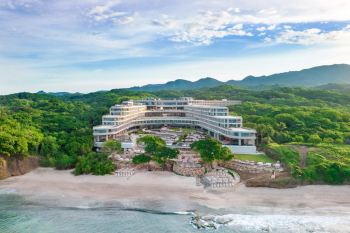
There is no single best resort for every Indian destination wedding. There are excellent resorts for South Asian weddings in Mexico as well as Caribbean islands like Grand Cayman, St. Lucia, Sint Maarten, or Curacao. The right resort depends on your guest count, event schedule, food expectations, venue requirements, privacy preferences, and destination.
The best resort is rarely the one that looks the most impressive in photos. It’s the one that can confidently execute your specific wedding. That’s why evaluating Indian wedding experience, food quality, venue variety, baraat logistics, and guest experience is so important.
How many venues should a resort have for an Indian destination wedding?
The number matters less than the variety.
A resort with four genuinely distinct venues often creates a better experience than a resort with eight venues that all feel similar. Ideally, your mehndi, haldi, sangeet, ceremony, and reception should each feel visually and emotionally different.
Do all resorts offer Indian food?
Most major wedding resorts in Mexico and the Caribbean offer Indian food. The more important question is how well they execute it.
Ask if the resort has dedicated Indian chefs, experience with multi-day Indian wedding menus, and the ability to accommodate regional cuisines, vegetarian requirements, and Jain meals.
Do resorts allow outside DJs and dhol players?
Most do, but policies vary. Some resorts charge vendor fees, require approved vendor lists, or impose sound restrictions that affect entertainment. Before signing a contract, ask for vendor policies and fees in writing and confirm restrictions that apply to DJs, MCs, and dhol players.
How many guests can destination wedding resorts accommodate?
It depends on the resort. Some boutique properties are best suited for 50-100 guests, while larger all-inclusive resorts in destinations like Cancun, Riviera Maya, and Punta Cana can comfortably accommodate 200-300+ guests. Not all all-inclusive resorts offer the same level of amenities, dining, or wedding infrastructure, so it’s important to understand what truly distinguishes a luxury all-inclusive resort before you book.
The key question is not maximum capacity. It’s whether the resort can comfortably support your guest count across accommodations, venues, dining, and event logistics.
How far in advance should we book our resort?
Most South Asian weddings should be booked 12-18 months in advance. For peak dates, large guest counts, or highly sought-after resorts, 18-24 months is often recommended.
Booking early improves availability, room block options, and negotiating leverage.
Do different destinations in Mexico affect the resorts I’ll be comparing?
Yes. Every destination offers a different mix of resort styles, scenery, guest experiences, and venue options. Cancun is known for its large selection of all-inclusive resorts, Riviera Maya for its expansive beachfront properties and relaxed atmosphere, and Los Cabos for its luxury resorts and dramatic ocean views.
The destination helps narrow your options, but the resort ultimately determines your wedding experience. If you’re still deciding where to celebrate, explore our guides to Why Cancun Is a Popular Location for South Asian Weddings, Why the Riviera Maya Is the Ideal Place for Your Destination Wedding, and Why You Should Consider Los Cabos for Your South Asian Destination Wedding.
Are wedding resorts in the Caribbean very different from those in Mexico?
They can be. Mexico generally offers a larger selection of all-inclusive wedding resorts, while many Caribbean islands have fewer properties but a more distinct island feel. Jamaica, the Dominican Republic, Aruba, St. Lucia, and The Bahamas each offer a different mix of scenery, resort styles, guest travel considerations, and wedding atmosphere.
If you’re comparing the Caribbean with Mexico, start with our guides to Jamaica: The Ultimate Destination Wedding Hotspot, Dominican Republic: The Dream Destination Wedding Hotspot, and Planning a Destination Wedding to St. Lucia.
Should we compare wedding packages before choosing a resort?
Yes, but wedding packages should be part of the evaluation, not the whole decision. A generous package can’t compensate for limited Indian wedding experience, poor food execution, restrictive vendor policies, or a layout that doesn’t fit your celebration. Once you’ve narrowed your options, use the Resort Scorecard in this guide to evaluate each resort more thoroughly. To compare package inclusions, perks, and group concessions, see our blog on The Best Resort Perks and Wedding Packages for Weddings in Mexico and the Caribbean.
Should I choose my destination before comparing resorts?
Yes, narrowing your search to one or two destinations makes it easier to compare resorts that fit your guest count, budget, travel needs, and vision. If you are still deciding where to celebrate, start with our Complete Guide to Planning a South Asian Destination Wedding in Mexico and the Caribbean, then use this Resort Scorecard to evaluate the properties on your shortlist.
Planning an Indian Destination Wedding in Mexico or the Caribbean?

Choosing the right resort is one of the most important decisions you’ll make during the planning process, and it’s where our team can help.
We are a full-service Indian destination wedding agency with specialized divisions that work together on every aspect of your wedding. That means you never have to coordinate between multiple companies or act as the go-between.
We’ve earned awards and praise from top travel brands and resorts throughout Mexico and the Caribbean and have been called “Indian Destination Wedding Experts of the Year.” AIC Hotel Group (the parent company of Hard Rock Hotels, Unico 20°87°, and AVA Resort Cancun) calls us “One of the Top 3 Travel Agencies” and one of the best for “Destination Wedding Production.” Hyatt, Palace Resorts, and the Jamaica Tourist Board have recognized us among North America’s top destination wedding and travel agencies.
Combined with a team that includes professionals from multiple areas of the wedding industry, we bring a depth of knowledge and perspective that produces unforgettable weddings.
We offer:
- Wedding Planning: From ceremony timelines and vendor sourcing to décor coordination and cultural traditions, we manage the details that bring your vision to life.
- Guest Travel and Logistics: Our travel division handles room blocks, guest reservations, airport transfers, and on-the-ground support. We also use our signature Resort Match Finder™ process to help identify the resorts that best align with your guest count, event requirements, budget, and overall wedding vision.
- Entertainment: Whether you need experienced Indian wedding DJs, MCs, dhol players, or other entertainment options, we can help make it happen.
Ready to start comparing resorts? Contact us and we’ll help you find the right fit for your wedding, your guests, and your vision.
Why Choose Indian Destination Wedding
Ready to plan your South Asian wedding in Mexico or the Caribbean? We’ll help you find the right resort for you and bring together all the travel details for you and your guests. And we’ll even connect you with vendors that specialize in South Asian weddings so you can shorten your wedding to-do list.
Please visit our Frequently Asked Questions page, and our summary of average South Asian destination wedding costs.
Learn about different destinations and resorts that have the best perks for South Asian weddings by contacting us online or call at 888-485-0005.


