
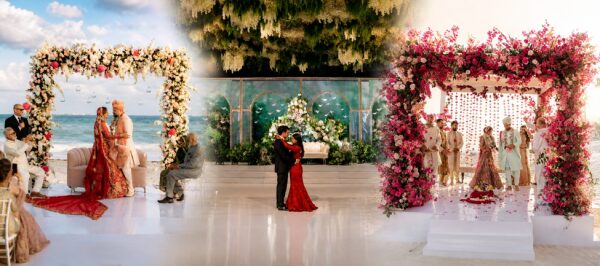
 Planning a South Asian destination wedding in Mexico or the Caribbean goes beyond choosing a beautiful location. It requires coordinating travel, accommodations, and multiple events across several days while creating an experience that is unforgettable for both you and your guests.
We’ve served as the destination wedding agency for Indian Destination weddings in Mexico and the Caribbean since 1996. Top resort brands you may know and love trust us. Hyatt recognized us as the “Indian Destination Wedding Experts of the Year,” and Top 100 Travel Advisors.
Palace Resorts who named us one of the “Top Travel Agencies in North America,” and AIC resorts who gave one of their most exclusive awards (Black Diamond Agency) and a Top Destination Wedding Producer in North America.
The Jamaica Tourist Board (JTB) even hailed us as the Top-Producing Jamaica Travel Specialists.
This is all in addition to many other awards by various resorts in Mexico and the Caribbean. Our team includes members from many parts of the wedding industry so we bring unique perspectives and insider knowledge you won’t find anywhere else.
This guide brings together what we’ve learned from working directly with couples, collaborating with top resorts and vendors, and personally vetting properties across these destinations.
You’ll learn how to:
- Choose the right resort for a multi-day wedding
- Coordinate travel for a large group
- Structure your wedding week for flow and energy
- Understand the roles of planners, travel specialists, and resort teams
- Make decisions that impact both cost and guest experience
Is a South Asian Destination Wedding in Mexico or the Caribbean Right for You?
Choosing a destination wedding is not just about location. It’s about how you want your wedding to feel.
For many South Asian couples, the decision comes down to experience, logistics, and how they want to spend time with their guests.
Couples who choose destination weddings do so for these reasons:
- They get more time with their guests over multiple days in a relaxed, beautiful environment
- It builds a stronger sense of connection throughout the wedding week compared to having a local wedding
- The wedding becomes a vacation and celebration all in one for you and your guests
Is a Destination Wedding More Affordable Than a Wedding at Home?
In our experience, a destination wedding in Mexico or the Caribbean often provides more value for what you spend. More often than most people expect, it is comparable or less expensive when you account for everything.
Traditional South Asian weddings at home typically involve:
- multiple venue rentals across several days
- separate catering costs for each event
- décor and rentals for each function
- vendor minimums and service charges
By the time you’re done, a US-based Indian wedding for 200 guests can easily run $100,000–$200,000 or more.
In a destination setting, your venue, food, beverages, and accommodations are often bundled, which simplifies planning and creates a more cohesive experience.
Your total investment will still depend on:
- guest count
- resort selection
- number of events you host
- level of customization you want
- whether you choose to work with Indian destination wedding experts like us who can negotiate on your behalf and secure perks that will lower your overall investment
See our article on how destination weddings are far most cost effective than you think.
Will Guests Actually Attend a Destination Wedding?
Not every invited guest will attend, but those who do tend to be more engaged throughout the experience.
Most South Asian destination weddings see attendance rates of 70-90%, depending on:
- how early you send invitations
- how accessible the destination is
- the makeup of your guest list
Is a Destination Wedding Realistic for Large Guest Counts?
Yes, but only with the right resort and early planning.
South Asian weddings require properties that can support:
- large room blocks
- multiple events across several days
- simultaneous use of different spaces
Not all resorts are designed for this scale. The resorts that do this well have done it before. They have large enough event spaces, experienced on-site coordinators, flexible catering capabilities, and the spaces to support larger, multi-day events.
Check out our article to get even more insights into why you should book early when it comes to your destination wedding in Mexico or the Caribbean.
How Do You Handle Family Members Who Can’t Travel?
Some guests may not be able to attend due to travel limitations, health, or personal circumstances.
Couples handle this in different ways, such as:
- hosting a smaller celebration at home before or after the wedding
- livestreaming key events
- including those family members in pre-wedding traditions
What About Family Pressure to Have a Traditional At-Home Wedding?
Many parents envision a local wedding surrounded by the extended community.
What tends to shift the conversation is when they see the experience: the resort, the level of service, the quality of the events, the joy on guests’ faces.
If you’re in that conversation now, the most powerful thing you can do is to show them real couples who’ve been through it.
Take a look at our client wedding videos showing their South Asian destination weddings in Mexico and the Caribbean. Share them with your family members and they’ll see how well the weddings upheld religious traditions, had authentic Indian cuisines and décor and had the kind of moments in surroundings you just can’t experience with a wedding at home.
Why Mexico and the Caribbean Work So Well for South Asian Weddings
Cancun offers some of the most accessible and well-developed resort options for destination weddings, with long stretches of beach, large all-inclusive properties, and easy airport access for guests.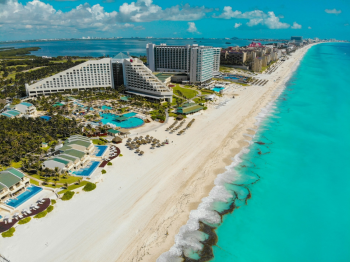
Punta Cana is known for its wide beaches and relaxed resort layouts, making it a popular choice for destination weddings that prioritize space, scenery, and a laid-back guest experience.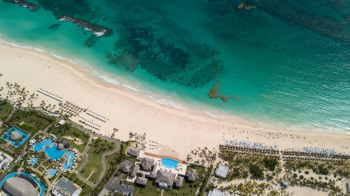
Mexico and the Caribbean have become popular for South Asian destination weddings because they combine accessibility, infrastructure, and experience in a way few other regions can.
Accessibility for Guests
Many destinations in Mexico and the Caribbean offer:
- direct flights from major U.S. and Canadian cities
- relatively short travel times (typically 3–5 hours from most US cities)
- simple airport-to-resort transfers
- No visa requirements for US and Canadian citizens
- For Indian nationals: a valid U.S. tourist visa can simplify entry into Mexico when traveling through the United States. However, guests cannot typically travel directly from India to Mexico using only a U.S. visa and would need a separate Mexican visa in that case.
Resorts Designed for Multi-Day Celebrations
All-inclusive resorts are uniquely suited for South Asian weddings because they are built to host multiple events across several days.
They provide:
- multiple venues within one property
- on-site catering and bar services
- accommodations for guests in one centralized location
This allows you to host your full wedding week without coordinating multiple venues.
Cultural Compatibility
Over the past several years, the popularity of South Asian weddings in Mexico and the Caribbean has soared. Therefore, resorts in these regions have experience hosting them and understand the requirements involved.
However, not all resorts offer the same level of experience. That’s where our team can help when you contact us for a consultation.
Understanding Wedding Destinations in Mexico
Moon Palace The Grand Cancun is one of the most popular resorts for South Asian destination weddings in Mexico, offering expansive beachfront space, multiple venue options, and access to additional resort sections for a full wedding week experience.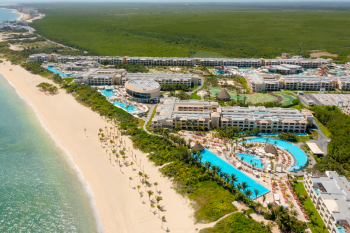
When couples start researching destination weddings in Mexico, the geography can feel confusing. States, regions, and city names get mixed together.
Here is a clean way to think about it:
- States are similar to U.S. states (for example, Quintana Roo)
- Regions describe broader areas within those states (such as the Riviera Maya)
- Destinations are the specific places and resort areas where weddings take place
Caribbean Coast: Cancun, Riviera Maya and Beyond (Quintana Roo)
The most popular area for South Asian destination weddings in Mexico is located on the Caribbean coast, within the state of Quintana Roo.
- Cancun: offers the largest number of all-inclusive resorts and the most experience with Indian weddings. Cancun’s Hotel Zone (Zona Hotelera) sits on a narrow strip of land surrounded by the Caribbean Sea. Note: most Cancun beaches face east, so you get spectacular sunrise lighting, not sunset.
- Playa Mujeres: just north of Cancun, quieter and more private, with some exceptional luxury resorts well-suited for upscale South Asian weddings.
- Riviera Maya: a stretch of coastline running south from Cancun through Playa del Carmen and beyond. More of a region than a single city.
- Playa del Carmen: a lively beach town within the Riviera Maya with strong resort options and a great balance of resort and local atmosphere
- Check out the best resorts in Playa Del Carmen, Mexico for South Asian destination weddings.
- Tulum: known for its natural beauty and bohemian aesthetic. More boutique-style resorts; better suited for smaller, more intimate weddings
What Is the Riviera Maya (and How Is It Different from Cancun)?
The Riviera Maya is a coastal region along the Caribbean Sea within the state of Quintana Roo. It is not a city, but a stretch of coastline that includes multiple destinations and resort areas.
Key locations within the Riviera Maya include:
- Playa del Carmen
- Tulum
- Akumal
- Puerto Morelos
Cancun, while nearby, is its own city located just north of the Riviera Maya.
From a planning perspective, Cancun and the Riviera Maya are often grouped together. They share the same airport, similar resort options, and very similar travel logistics.
Pacific Coast (Los Cabos and Puerto Vallarta)
Mexico’s Pacific coast is a great choice for couples who want a more dramatic visual landscape.
Key destinations include:
- Los Cabos: where the desert meets the sea. Dramatic rocky cliffs, modern luxury resorts, and a more elevated contemporary feel. Note: most Cabo beaches are not swimmable due to strong Pacific currents. Resorts make up for it by having stunning swimming pools. Los Cabos faces west, which means stunning sunsets unlike Cancun.
- Puerto Vallarta: lush jungle meets the ocean. A more traditional Mexican feel with mountain scenery, a historic downtown, and resorts that range from boutique to large-scale. A strong option for couples who want something different from the Cancun resort corridor.
- See the excellent resorts for South Asian destination weddings in Puerto Vallarta, Mexico. An especially popular one among our clients is Dreams Bahia Mita.
Take a look at the destinations available to you in Mexico and the most popular resorts in each.
Understanding Wedding Destinations in The Caribbean
Hyatt Ziva Cap Cana is a top choice in the Caribbean for destination weddings, known for its modern design, swimmable beach, and versatile venues that work well for multi-day South Asian wedding celebrations.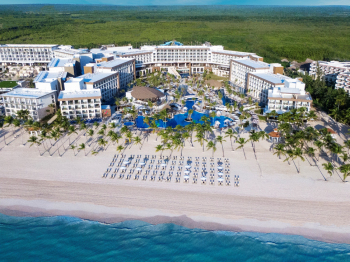
The Caribbean is generally a bit more laid-back, with distinct island cultures and scenery.
For South Asian weddings, consider:
- Punta Cana, Dominican Republic: the most popular Caribbean destination for Indian weddings. Large, modern all-inclusive resorts and strong value for larger guest counts. Hyatt Ziva Cap Cana and Hyatt Zilara Cap Cana have become popular choices.
- Jamaica: rich culture, warm hospitality, strong resort options at Montego Bay and Negril. Moon Palace Jamaica is one of the many properties we work with frequently for Indian weddings.
- Turks and Caicos: more exclusive, with some of the most beautiful beaches in the world. Better suited for smaller, ultra-luxury weddings than large-scale Indian celebrations.
- Bahamas, Aruba, Lucia, and beyond: all viable options depending on your vision, guest count, and budget. Each has distinct advantages and trade-offs we can walk you through in a consultation.
Why Location Choice Matters
Choosing the right destination in Mexico or the Caribbean impacts:
- travel logistics for your guests
- the types of resorts available
- how your events will flow across the property
- the overall feel of your wedding week
Some locations are better suited for large, multi-day South Asian weddings, while others are better for smaller or more intimate celebrations.
Understanding these differences early helps you narrow down your options more efficiently and choose a destination that works for you.
Mexico vs. the Caribbean: Which Is Better for Your Wedding?
Both regions offer excellent options, but they differ in ways that may influence your decision.
Cancun and Riviera Maya (Mexico):
- largest selection of resorts
- most experience with South Asian weddings
- wide range of price points
Los Cabos (Mexico):
- dramatic ocean and desert scenery
- more modern, upscale properties
- limited swimmable beaches due to ocean conditions
Punta Cana (Dominican Republic):
- strong value for larger guest counts
- newer resort inventory
- well-suited for multi-day events
Jamaica:
- unique cultural atmosphere
- strong hospitality and service
- fewer large-scale resort options
The best destination depends on:
- your guest experience priorities
- your budget
- your overall vision for the wedding week
The 5 Decisions That Will Shape Your Entire Wedding Week
Nina and Avi’s beachfront ceremony at Moon Palace The Grand Cancun highlights how Indian destination weddings in Mexico can blend traditional rituals with oceanfront settings and thoughtfully designed mandaps.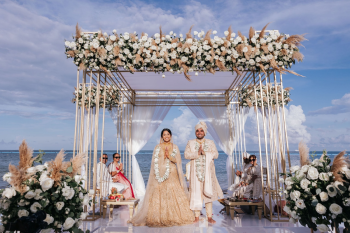
Ripal and Palak’s reception at Generations Riviera Maya showcases how destination weddings can incorporate dramatic indoor décor, lighting, and stage design for an elevated evening celebration.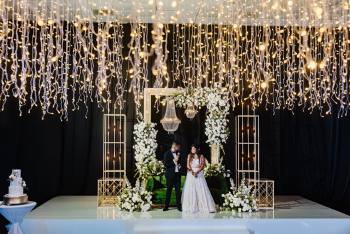
Every South Asian destination wedding comes down to five core decisions that shape how your entire wedding week feels.
Making these well and in the right order helps the rest of the planning process feel much easier.
Decision 1: Choosing the Right Resort (More Than Just How It Looks)
The resort affects everything from logistics and guest experience to how your events flow across multiple days.
Most couples focus on how a resort looks in photos. While visual appeal matters, but what counts more is how the resort functions in real life.
What actually matters:
- Layout and walkability
- Are venues close together or spread across the property?
- Will guests need transportation between events?
- Is it easy for older guests or families with children to move around?
- Event space variety
- Does the resort offer multiple venues that feel distinct?
- Can you host both daytime and evening events without repetition?
- Capacity and infrastructure
- Can the resort accommodate your full guest list on property?
- Are there enough restaurants, pools, and amenities for your group?
- Experience with South Asian weddings
- Does the resort regularly host multi-day Indian weddings?
- Are they familiar with baraats, mandaps, and large-scale receptions?
- Room block structure — What are the minimum room block requirements, and how does your room block affect what wedding perks and venue access you receive?
A resort can look beautiful online but still create logistical challenges in practice.
Prioritizing layout, flow, and experience ensures your wedding week feels seamless from beginning to end.
Decision 2: Designing the Guest Experience
Your guests experience begins before they arrive and continues throughout their stay.
Key factors to consider include:
- Travel convenience
- How easy it is for guests to book and travel (which is where your travel concierge team like us earns their value)
-
- Availability of direct flights
- Ease of airport transfers
- Clear communication about logistics
- On-site experience
- Dining options and quality
- Activities and entertainment
- Pool and beach accessibility
- Downtime between events
- Are there enough amenities to keep guests engaged?
- Is there time built into the schedule for relaxation?
A strong guest experience balances structure with flexibility.
Decision 3: Structuring Your Wedding Week for Flow and Energy
The way you structure your events affects:
- guest energy
- overall pacing
- how connected the experience feels
Classic pacing mistakes include:
- Scheduling the Sangeet too late at night when the ceremony is early the next morning
- Placing events too far apart within the resort
- Scheduling too many events back-to-back
When the flow is right, the entire experience feels intentional rather than rushed.
Decision 4: Budget Allocation That Matches Your Priorities
Budget is not just about how much you spend. It’s about how you allocate it.
At destination weddings, costs are distributed differently than traditional weddings.
The biggest cost drivers include:
- Guest count
- Resort tier and location
- Number of events
- Level of customization (this includes décor and production)
Strategic allocation often means:
- prioritizing guest experience, including accommodations and food
- investing in the events that have the most impact
- avoiding overspending in areas guests may not notice
Décor and production are where budgets most often exceed expectations because standard resort packages don’t include the level of customization most Indian weddings require.
Understanding these trade-offs early helps you make confident decisions throughout the planning process.
Decision 5: Vendor and Logistics Strategy
With destination weddings, instead of independent vendors operating separately, everything must be coordinated across:
- resort teams
- external vendors
- multiple events over several days
Important considerations include:
- what the resort provides within its package
- what requires outside vendors
- how vendors will communicate and coordinate
South Asian destination weddings often require:
- multiple specialized vendors
- detailed coordination across events
- customization beyond standard resort offerings
Clarifying your vendor strategy early prevents miscommunication, delays, and unexpected costs.
How Planning a Destination Wedding Is Different from Planning Locally
Palak and Neel’s ceremony at Moon Palace The Grand Cancun reflects how destination weddings involve coordinating multiple elements, from ceremony design to guest experience and event flow across the entire wedding day.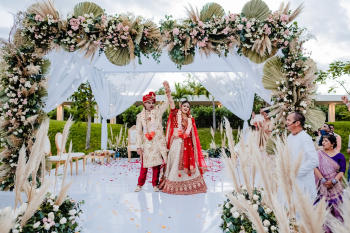
One of the biggest differences between destination weddings and local ones is the added layer of travel logistics.
This includes:
- flights for a large group
- airport transfers
- accommodations across multiple nights
- communication before and during the trip
Another key difference is the level of dependence on the resort.
Resorts operate within structured systems and timelines, which means:
- less flexibility for last-minute changes
- defined processes for booking and planning
- limitations based on resort policies
Timing is also more critical.
Popular resorts and dates can book out well in advance, especially for South Asian weddings with larger guest counts. Waiting too long can significantly limit your options.
Finally, destination weddings require coordination across multiple days and events.
This includes:
- managing transitions between events
- ensuring vendors are aligned
- maintaining a consistent flow throughout the week
Do You Need a Wedding Planner, Travel Concierge, and Resort Coordinator?
Each of the following roles serves a different purpose.
What a Resort Wedding Coordinator Actually Does
The resort coordinator manages on-site logistics within the resort.
They typically handle:
- coordinating ceremony and reception setup
- managing event timing on the day of
- working within the resort’s available options
However, there are important limitations to understand.
Resort coordinators:
- often manage multiple weddings at the same time
- follow standardized processes rather than fully customized plans
- do not handle guest travel logistics
- have limited involvement with external vendors
They are focused on the resort’s operations, not full wedding planning.
What a Wedding Planner Does
A wedding planner focuses on the design and execution of your events.
They are responsible for:
- developing your overall vision
- creating detailed timelines across multiple events
- coordinating all vendors
- managing the flow of each event
- ensuring cultural and ceremonial elements execute correctly
For South Asian weddings, planners play a critical role in ensuring consistency across several days of events.
What a Travel Concierge Does
A travel concierge team (also known as a travel agency) focuses on the guest experience and travel logistics.
They handle:
- helping you select the right resort based on based on your priorities, guest count, and budget.
- securing room blocks (ensuring your room block fills in a way that protects your wedding perks and concessions)
- managing guest bookings by providing each guest with a direct booking link to your unique web page
- coordinating flights and transfers
- serving as a point of contact before and during the trip
- leveraging their relationships with resorts to negotiate on your behalf
A travel concierge team is essential for keeping everything organized and ensuring a smooth experience for your guests.
Why South Asian Destination Weddings Typically Involve These Roles
South Asian destination weddings often involve multiple events, large guest counts, and complex logistics. Because of this, key functions, such as wedding planning, guest travel coordination, and on-site resort management, each play an important role in the overall experience.
These responsibilities can be handled by separate teams or through a more integrated approach, depending on how you choose to structure your wedding planning. When these functions are clearly defined and working together, the process becomes significantly smoother.
Destination Wedding Agencies — The Best of Both Worlds
A destination wedding agency is not a travel agency with wedding add-ons, and it is not a wedding planner who happens to book flights.
It is a company built specifically around the full destination wedding experience — with dedicated divisions for travel coordination, wedding planning, and entertainment services all operating together under one roof.
This structure exists because an Indian destination wedding is not a single event. It is a multi-day, multi-celebration experience involving hundreds of moving pieces across guests, venues, vendors, and cultural traditions. No single generalist can manage that well. A destination wedding agency is designed from the ground up to handle exactly that.
That’s what we are.
We are not simply a travel concierge. We are a full-service destination wedding agency with specialized divisions that work together on every aspect of your wedding, so you never have to be the go-between. Take a look at the process our team uses to make the entire experience run smoothly for you.
Here is what that looks like in practice:
- Wedding Planning: From your ceremony timeline to vendor sourcing, décor coordination, and cultural traditions, our planning team manages the details that make your celebration meaningful.
- Guest Travel and Logistics: Our travel division handles everything your guests need, from flight coordination and hotel room blocks to airport transfers and on-the-ground support throughout their stay. We use our signature Resort Match Finder™ to match you with a select group of resorts that perfectly match what you need.
- Entertainment: Whether you need a live dhol player, DJ, or other entertainment option, our entertainment division brings the energy your celebration deserves.
All of these services are backed by our five-point promise. Because these divisions are part of the same agency, they are in constant communication with each other. Your guests’ arrival schedule informs your welcome dinner timing. Your entertainment bookings align with your venue logistics. Everything stays connected because it was never separated to begin with.
This is the difference between hiring a team and hiring your team.
The Biggest Mistake Couples Make
One of the most common misconceptions is assuming the resort coordinator will handle every aspect of the wedding.
In reality, this can lead to:
- gaps in communication between vendors
• limited flexibility and customization
• unnecessary stress for the couple
Understanding how these roles work—and choosing the right structure for your wedding—helps you avoid these challenges from the beginning.
The Vendors You’ll Need for a South Asian Destination Wedding
Shivani and Nilan’s wedding at Hard Rock Los Cabos highlights the role of décor and floral vendors in transforming ceremony spaces for South Asian destination weddings, from mandap design to overall event styling.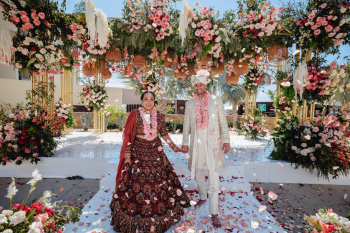
Unlike local weddings, where vendors operate independently, destination weddings require a more coordinated approach. Many services are handled by the resort, while others require specialized outside vendors.
Core Vendors for a Destination Wedding
These typically include:
- Wedding planner
- Travel concierge
- Photographer and videographer
- Decor team
- DJ or entertainment
South Asian-Specific Wedding Vendors
- Mehndi artist
- Dhol player
- Baraat transportation (horse, luxury car or other custom options)
- Indian catering (if the resort’s offerings are limited)
Optional Enhancements That Elevate the Experience
These are not required but they can add a unique and memorable touch.
Examples include:
- Live painter
- Fireworks or special effects
- Cultural performers (fire dancers, musicians, water drummers and more)
- Welcome experiences (custom gifting, themed events, or curated guest activities)
Read our article on fun ways to impress your guests with these fun add-ons.
Learn about the fun South Asian destination wedding trends that never go out of style.
What the Resort Provides Versus What You Bring In
Most resorts typically provide:
- basic ceremony setup
- standard reception setup
- in-house catering and bar services
- on-site coordination
However, South Asian weddings often require a higher level of customization than standard packages offer.
This may include:
- multiple distinct event designs across several days
- specialized décor beyond standard offerings
- cultural elements that require specific expertise
- external vendors working alongside the resort team
How Vendor Coordination Works in a Destination Setting
Vendor coordination is more complex in a destination wedding than in a local one.
Instead of working independently, vendors must coordinate across:
- resort timelines and policies
- multiple event spaces
- several days of programming
This requires:
- clear communication between all parties
- detailed timelines for each event
- alignment between your planner, resort team, and vendors
Without proper coordination, even strong individual vendors can struggle to deliver a seamless experience.
Your Destination Wedding Planning Timeline
Planning a South Asian destination wedding requires a longer and more structured timeline than a traditional wedding.
12–18 Months Before the Wedding
This is the most important stage of planning.
Key priorities include:
- defining your overall vision and priorities
- estimating your guest count
- choosing your destination
- selecting and securing your resort
- beginning discussions with your travel concierge and planner
Popular resorts and dates can book quickly, especially for large South Asian weddings.
Starting early gives you more flexibility and better options.
9–12 Months Before the Wedding
Here, your focus shifts to securing logistics and communicating with your guests.
Important steps include:
- confirming your room block
- sending save-the-dates
- beginning guest communication about travel
- shortlisting key vendors such as photography, décor, and entertainment
Early communication helps guests plan their travel and increases the likelihood of attendance.
6–9 Months Before the Wedding
This phase is where your wedding starts to take shape in a more detailed way.
Key actions include:
- finalizing your vendor team
- outlining your event schedule
- beginning design and décor discussions
- coordinating initial timelines with your planner
This is also a good time to ensure all vendors understand the structure of your multi-day events.
3–6 Months Before the Wedding
As your wedding approaches, the focus shifts to refinement and coordination.
At this stage, you should:
- track guest bookings and finalize attendance
- confirm travel arrangements for key guests
- refine event details and timelines
- coordinate closely with your planner, resort, and vendors
Clear communication during this phase helps prevent last-minute issues.
Final 1–3 Months Before the Wedding
Your focus should be on:
- confirming final headcounts
- finalizing seating arrangements and event layouts
- reviewing detailed timelines for each event
- ensuring all vendors and teams are aligned
By this point, most major decisions should already be complete.
This phase is about fine-tuning and confirming details.
Wedding Week
During the wedding week:
- your planner and coordinator manage execution
- your travel concierge supports guest needs
- your vendors bring each event to life
How to Choose the Right Date for Your Destination Wedding
Priyanka and Varun’s ceremony at Planet Hollywood Cancun reflects how the time of year and setting can shape the overall wedding atmosphere, from lighting and weather conditions to the guest experience during outdoor events.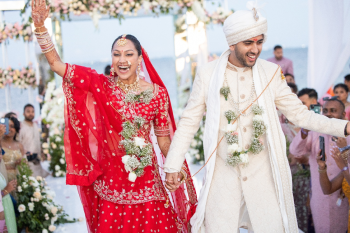
Your date affects availability, pricing, weather, and how easy it is for your guests to attend.
For a South Asian destination wedding, where multiple events and a large guest list are involved, selecting the right date requires a more strategic approach.
Peak Season Versus Off-Season: What It Means for Your Wedding
Most destinations in Mexico and the Caribbean have clear high and low travel seasons.
Peak season typically offers:
- more predictable weather
- higher demand for top resorts
- increased pricing for rooms and events
Off-season often provides:
- better availability
- more flexibility with dates
- potential cost savings
However, off-season may come with weather trade-offs, depending on the destination.
Shoulder seasons offer the best balance between weather, availability, and cost.
Weather Patterns to Consider in Mexico and the Caribbean
While exact conditions vary by location, it’s important to understand general patterns:
- some months fall within hurricane season
- certain destinations experience more frequent rain at specific times of year
- weather can vary significantly between regions
The goal is not to find “perfect” weather, but to choose a time of year that aligns with your priorities and comfort level.
Guest Availability and Travel Timing
Your wedding date should also take your guests’ schedules into account as well as:
- major holidays and long weekends
- school schedules for families with children
- work schedules and vacation availability
Resort Availability and Booking Windows
Top resorts and preferred wedding dates can book far in advance, especially for South Asian weddings.
This is important if you:
- have a large guest count
- need multiple event spaces across several days
- are targeting a specific resort or location
Being flexible with your date can open up more options and make the planning process smoother.
Destination-Specific Considerations
Each destination has unique factors that may influence your date selection.
For example, some areas of the Riviera Maya experience seasonal seaweed.
These factors don’t necessarily limit your options, but they are important to be aware of when choosing your date.
Guest Experience: The Part Most Couples Underestimate
Jignya and Pranav’s welcome party on a boat shows how guest experience extends beyond the wedding day, giving everyone time to connect, celebrate, and enjoy the destination together.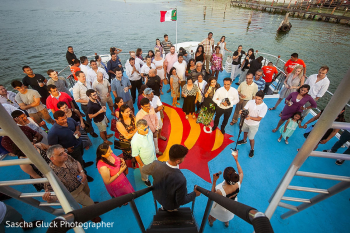
Zain and Nayalesh’s sangeet at Grand Fiesta Americana Los Cabos shows how unforgettable guest experiences often come from moments beyond the ceremony, from entertainment to large-scale celebrations like fireworks.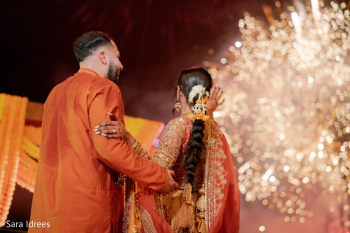
When planning a South Asian destination wedding, most couples focus on events, décor, and logistics.
What often gets overlooked is the overall guest experience and this is what shapes how they remember your wedding week.
Your guests are not just attending a single event. They are traveling, staying for several days, and participating in a full wedding week.
Creating a smooth, thoughtful experience for them is just as important as planning the events themselves.
Guest experience is shaped not only by your events, but also by the decisions you make behind the scenes.
Why Room Blocks Matter More Than Most Couples Expect
A room block is a set of rooms reserved at your resort for your wedding guests, typically at a negotiated rate and tied to your overall wedding agreement.
When managed correctly, room blocks shape how connected, seamless, and enjoyable your wedding feels for your guests.
The number of rooms booked within your group can influence:
- eligibility for complimentary events
- added perks or concessions from the resort
- access to private venues
- room upgrades for the couple
Because of this, where and how your guests book matters.
When guests stay within your room block, it helps maximize both logistical ease for everyone and the overall value.
How Room Blocks Work for Destination Weddings
Once your room block is set up, the next step is understanding how it functions in practice.
While the concept is straightforward, the structure of your room block—and how your guests book within it—can directly impact your timeline, flexibility, and overall experience.
Not All Room Blocks Are Structured the Same: Contracted Versus Courtesy Room Blocks
Some room blocks are contracted, which means:
- you are responsible for filling a set number of rooms
- there may be financial penalties if rooms are not booked
Other room blocks are more flexible, which means:
- fewer or no financial obligations
- more freedom for guests to book at their own pace
- potentially fewer guaranteed perks
Choosing the right structure depends on your guest count, timeline, and comfort level.
How Guest Booking Behavior Can Impact Your Wedding
One of the most overlooked challenges is how guests actually book their travel. Many couples assume guests will book early and within the group.
In reality, guests often:
- delay booking until closer to the wedding
- book outside the room block
- have questions about travel, timing, and options
This can affect:
- difficulty tracking who is attending
- missing room block thresholds tied to wedding perks
- added stress trying to coordinate last-minute details
Having a clear booking process and centralized support helps keep everything organized.
Guest Communication: Setting Them Up for Success
- Send save-the-dates at least 12 months in advance
- Follow up with a formal invitation and detailed travel instructions 6–9 months out
- Create a wedding website that includes all travel information, booking links, event schedule, and FAQs
- Set a clear room block booking deadline and communicate it multiple times
- Designate someone (your travel concierge, or a trusted family member) as the point of contact for guest booking questions
Keeping Your Group Together
A well-managed room block keeps your guests in one place.
This allows:
- events feel more connected and cohesive
- guests can easily move between venues
- the overall experience feels more immersive
If guests book outside the group, it can create:
- delays between events
- transportation issues
- a more fragmented experience
Coordinating Travel for a Large Group
Unlike local weddings, destination weddings require managing travel for a large group of people.
Guests may:
- arrive on different days
- stay for different lengths of time
- need help with flights, transfers, and accommodations
Without centralized coordination, this can quickly become disorganized.
Having a clear system for booking and communication ensures that guests feel supported throughout the process.
What Guests Pay Versus What You Cover
Guests are typically responsible for:
- flights
- hotel accommodations
- optional excursions and activities
Couples cover:
- food and entertainment
- airport transfers
- optional: Some couples subsidize a portion of guest room costs for immediate family, or cover excursions and group activities
Being transparent early helps guests plan accordingly and reduces last-minute questions.
Family-Friendly Versus Adults-Only Resorts
Choosing between a family-friendly or adults-only resort will directly impact your guest experience.
Family-friendly resorts:
- accommodate guests traveling with children
- offer kids’ clubs and family-oriented amenities
- create a more inclusive environment for all ages
Adults-only resorts:
- provide a quieter, more relaxed atmosphere
- preferred by couples prioritizing a more intimate setting
Choose based on the makeup of your guest list and the type of experience you want to create.
Read more about why Indian couples are choosing adults-only destination weddings in Mexico and the Caribbean.
Planning for Families with Young Children or Special Needs
South Asian weddings often include guests across multiple generations.
For families traveling with young children, certain resort features can make a meaningful difference.
These may include:
- freshly prepared baby food or flexible dining options
- in-room amenities such as cribs and bottle warmers
- kids’ clubs with extended or flexible hours
For guests with specific needs, including neurodivergent children, some resorts offer more supportive environments.
These may include:
- trained staff within kids’ programs (for example, staff who have received training in working with children with autism)
- quieter or less stimulating spaces
- more attentive service for families requiring additional support
Not all resorts offer these features.
Being aware of these differences early allows you to choose a property that better supports your guests’ needs.
Common Mistakes to Avoid When Planning a South Asian Destination Wedding
Digisha and Ronak’s reception at Dreams Bahia Mita highlights the level of coordination required for lighting, décor, and entertainment—details that are often underestimated but play a major role in the overall wedding experience.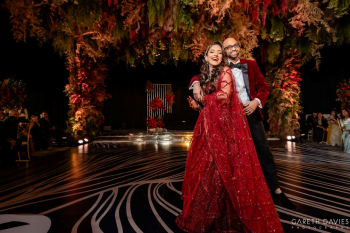
Even with the best intentions, many couples run into challenges during the planning process.
Most of these issues are avoidable with the right strategy and understanding early on.
Choosing a Resort Based on Aesthetics Alone
Selecting a resort based primarily on how it looks in photos can create challenges later.
While visual appeal is important, it does not reflect how the resort functions during a multi-day wedding.
Key issues that can arise include:
- event spaces that are too far apart
- limited venue options for multiple events
- layouts that make guest movement difficult
A resort that looks beautiful online may not provide the best experience in practice.
Prioritizing layout, flow, and functionality leads to a more seamless wedding week.
Underestimating Guest Logistics
Many couples focus heavily on their events but underestimate the complexity of managing guest logistics.
This includes:
- coordinating travel for a large group
- managing room blocks and bookings
- answering guest questions throughout the process
Without a clear plan, this can quickly become overwhelming.
Strong communication and centralized support make a significant difference in keeping everything organized.
Assuming the Resort Handles Everything
Many couples assume that the resort will manage all aspects of their wedding.
In reality, resorts focus on executing events within their own structure and offerings.
This can lead to:
- gaps in planning and coordination
- limited customization
- misalignment between vendors
Understanding the roles of your planner, travel concierge, and resort coordinator helps prevent these issues.
Waiting Too Long to Book Key Elements
Delays in booking can result in:
- limited resort availability
- fewer options for preferred dates
- reduced vendor availability
South Asian weddings, especially those with larger guest counts, often require earlier commitments.
Starting the planning process early gives you more flexibility and better overall options.
Not Designing the Wedding Week as a Whole
Without a cohesive plan, this can lead to:
- inconsistent energy between events
- poor pacing
- guest fatigue
Designing your wedding week as a complete experience ensures that each event flows naturally into the next.
Overlooking Guest Experience
It is easy to focus on the wedding itself and overlook how guests will experience the entire trip.
This includes:
- travel coordination
- accommodations
- downtime between events
- overall comfort and convenience
When guest experience is not prioritized, even well-executed events can feel less enjoyable.
Keeping your guests in mind throughout the planning process creates a more memorable and positive experience for everyone.
Legal Considerations for Getting Married in Mexico and the Caribbean
While your cultural ceremony is often the main focus, legal requirements vary by destination and can impact your planning decisions.
Understanding your options early helps you avoid unnecessary complications.
Legal vs Symbolic Ceremonies
Most couples planning a destination wedding choose to have a symbolic ceremony at the resort rather than a legal one.
A symbolic ceremony allows you to:
- fully customize your wedding without legal restrictions
- incorporate all cultural and religious traditions
- avoid complex paperwork and requirements
Our Recommendation: Complete the civil ceremony at home and having your full cultural celebration at the resort to simplify the process.
Legal Requirements Vary by Destination
Each country has its own legal requirements for marriage.
These may include:
- specific documentation
- blood tests (in some locations)
- mandatory waiting periods
- translation of official documents
These requirements can add time and complexity to your planning process.
It’s important to research the specific rules for your chosen destination early.
Timing and Documentation Considerations
If you choose to have a legal ceremony abroad, timing becomes especially important.
You may need to:
- arrive several days early
- submit documentation in advance
- coordinate with local authorities
Delays or missing paperwork can impact your ceremony timeline.
Planning ahead ensures everything is completed smoothly.
Why Many Couples Choose to Marry Legally at Home
For many South Asian couples, completing the legal marriage at home simplifies the process significantly.
This allows you to:
- avoid destination-specific legal requirements
- focus entirely on your wedding events abroad
- reduce stress during the wedding week
Your destination wedding can then focus on the cultural and celebratory aspects that matter most.
Understanding Destination Wedding Packages
Raveena and Shyamal’s wedding at Planet Hollywood Cancun highlights how destination wedding packages extend beyond ceremony inclusions to the overall resort experience, from scenic backdrops to moments shared throughout the wedding week.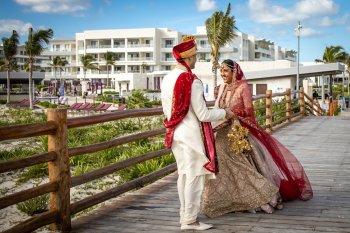
Wedding packages are often one of the first things couples look at when researching resorts.
While they can be helpful, it’s important to understand what they actually include and what they don’t.
The Three Types of Resort Wedding Approaches
In our experience, there are three resort categories for South Asian weddings:
- Resorts with dedicated South Asian wedding packages: These properties (such as Moon Palace The Grand – Cancun, or Hard Rock Riviera Maya) have invested in developing specific packages for Indian weddings that have:
- Pre-designed options for multi-day weddings
- Indian cuisine options or established catering vendor relationships
- Experienced staff who understand the structure of a multi-day celebration
- Often have marketing specifically targeting South Asian couples
Read about these Indian destination weddings at resorts with dedicated South Asian wedding packages:
Priya and Mit’s Unbelievably Beautiful Indian Destination Wedding at Moon Palace The Grand – Cancun
Minal and Navin’s Exquisite Indian Destination Wedding at Generations Riviera Maya Resort
Roshni and Paraj’s Exhilarating Indian Destination Wedding at Planet Hollywood Cancun
- Resorts that fully customize weddings: These properties don’t have a pre-packaged Indian wedding offering, but they have the staff experience, and infrastructure to build your wedding from the ground up.
- Offer flexibility to design each event from scratch
- Require more coordination with planners and vendors
- Can deliver a more tailored result
- Resorts not designed for South Asian weddings: These are the resorts to avoid and working with a travel concierge team who knows the market helps you steer clear of them.
- May have a beautiful property but limited event space
- Little to no experience with Indian ceremonies
- Little to no access to Indian catering
- Inflexible policies around outside vendors
Choosing the right type of resort has a major impact on how smoothly your wedding is executed.
What Wedding Packages Typically Include
Most wedding packages provide a starting point for your wedding.
These often cover:
- ceremony setup
- basic reception setup
- standard décor elements
- food and beverage for select events
These inclusions are usually designed for traditional, single-day weddings.
What Wedding Packages Usually Do Not Include
Many important elements are not included in non-South Asian packages.
These often include:
- multiple events across several days (each event beyond the first typically requires a separate event contract and per-person catering fee)
- Indian cuisine (authentic Indian catering is either a premium add-on through the resort or requires an outside caterer, often with an additional outside vendor fee)
- Cultural or ceremony-specific requirements
- Extended event hours beyond standard package end time
- Custom décor for each event
- South Asian DJ or entertainment with cultural expertise
- Mehndi artist and dhol player
A good travel concierge and planner will help you understand exactly what you’re getting within a package and what you’ll need to supplement.
Why Package Pricing Is Not the Full Cost
A common misconception is that the package price reflects the total cost of the wedding.
In reality, additional elements often contribute significantly to the overall investment.
These may include:
- Per-person food and beverage costs for each additional event
- Outside vendor fees
- Indian catering premium or outside caterer costs
- Décor and production beyond the package
- Guest room block total (which affects your overall wedding perks)
Understanding this early helps you plan your budget more accurately.
How to Evaluate Packages Like a Pro
Instead of focusing only on package pricing, it’s more effective to evaluate how well a resort aligns with your overall needs.
Rather than comparing packages on face value, consider these questions:
- How flexible is this resort with customization?
- What is their experience with South Asian multi-day weddings?
- How does their layout support your guest experience?
- What are the outside vendor policies and fees?
- Does the resort have Indian catering capability or approved catering vendors?
- How does our room block affect what perks and venue access we receive?
- How do their offerings support your event structure?
Choosing a resort based on overall fit, not just package price, leads to a better outcome.
Learn more about the best resort perks and wedding packages for weddings in Mexico and the Caribbean.
Start Planning Your South Asian Destination Wedding with the Right Team
Planning a South Asian destination wedding involves many moving parts: from selecting the right resort to coordinating travel and structuring multiple events across several days.
While it’s possible to navigate this on your own, the process can quickly become time-consuming and overwhelming.
That’s where we come in.
Our award-winning team will help you:
- narrow down the best resort options quickly out of hundreds of options
- guide you through the planning process from the very beginning
- coordinate guest travel and room blocks seamlessly
- ensure your wedding is structured in a way that feels smooth, connected, and intentional
Instead of spending time researching, comparing, and second-guessing your options, you can move forward with clarity—knowing your decisions are aligned from the start.
Start your destination wedding planning with us
Frequently Asked Questions About South Asian Destination Weddings in Mexico & the Caribbean
How much does a South Asian destination wedding in Mexico or the Caribbean cost?
Costs vary depending on guest count, resort, and number of events.
Most South Asian destination weddings fall within a broad range based on how customized the experience is and how many events are included.
The biggest factors that influence cost include:
- number of guests
- resort tier
- number of events
- décor and production level
Can all resorts in Mexico handle South Asian weddings?
No, not all resorts are equipped to handle South Asian weddings.
South Asian weddings require:
- multiple events across several days
- specialized décor and setup
- cultural understanding of ceremonies
Resorts with experience in South Asian weddings are better prepared to handle these requirements.
When should we start planning a destination wedding?
Most couples should begin planning at least 12–18 months in advance.
This allows enough time to:
- secure the best resort options
- coordinate guest travel
- book preferred vendors
Starting early provides more flexibility and better availability.
Do we need both a wedding planner and a travel agency?
In most cases, yes.
Each role serves a different purpose:
- a wedding planner manages design, vendors, and event execution
- a travel agency or concierge handles guest logistics and bookings
- the resort coordinator manages on-site details
Having all three helps ensure a smooth planning process.
Is it better to have a legal or symbolic ceremony?
Many couples complete the legal ceremony at home and have a symbolic ceremony at the destination.
This simplifies the process and allows more flexibility for cultural and religious traditions.
What is the best time of year for a destination wedding in Mexico?
The best time depends on your priorities.
Peak season offers:
- more predictable weather
- higher demand and pricing
Off-season offers:
- more availability
- potential cost savings
Choosing the right time depends on what matters most to you.
How do we make sure our guests book within the room block?
Guests are more likely to book within the block when:
- instructions are simple and easy to follow
- they understand the benefits
- they have support during the booking process
Working with a travel concierge helps ensure everything stays organized.
What is the biggest mistake couples make when planning a destination wedding?
One of the biggest mistakes is choosing a resort based only on appearance rather than functionality.
Other common mistakes include:
- underestimating guest logistics
- waiting too long to book
- assuming the resort handles everything
Making decisions strategically early in the process helps avoid these issues.
Why Choose Indian Destination Wedding
Ready to plan your South Asian wedding in Mexico or the Caribbean? We’ll help you find the right resort for you and bring together all the travel details for you and your guests. And we’ll even connect you with vendors that specialize in South Asian weddings so you can shorten your wedding to-do list.
Please visit our Frequently Asked Questions page, and our summary of average South Asian destination wedding costs.
Learn about different destinations and resorts that have the best perks for South Asian weddings by contacting us online or call at 888-485-0005.


