
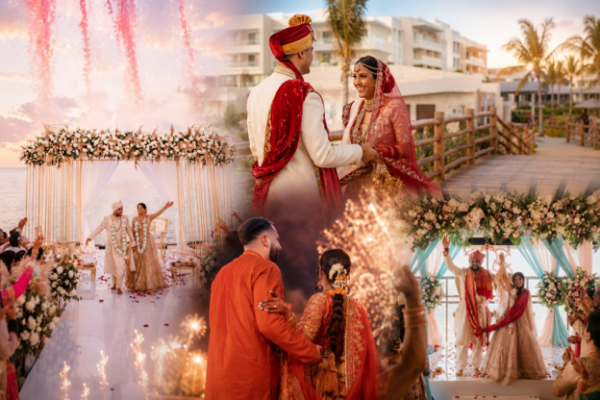
You said yes. The families are thrilled. And now everyone is asking the same question: where do we start? Planning an Indian destination wedding is one of the most exciting things you will ever do, and it is also one of the most layered.
You are not just organizing a single event. You are coordinating multiple ceremonies across several days, managing travel for hundreds of guests, selecting a resort that can genuinely handle the cultural scope of a South Asian celebration, and doing all of it from thousands of miles away. That is a lot to take on without a clear roadmap.
This guide walks you through every major step, from picking your destination to managing guest travel to pulling together vendors. If you follow this process in order, you will avoid the most common pitfalls and arrive at your wedding weekend feeling prepared rather than overwhelmed.
Step 1: Decide What Kind of Wedding You Actually Want
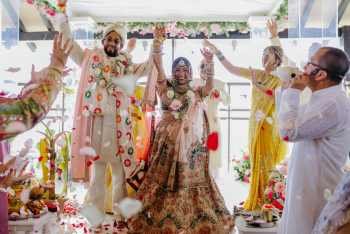
Before you look at a single resort or price out flights, sit down with your partner and get aligned on the basics. Indian weddings vary significantly by religion, region, and family tradition. A Hindu wedding with a full baraat, pheras, and multi-day programming looks completely different from a Sikh Anand Karaj or a Muslim Nikkah ceremony.
Knowing exactly what rituals and events matter most to your families will shape every decision that follows.
Ask yourselves:
- How many events do we want to host, and across how many days? Most Indian destination weddings with Indian Destination Wedding run three to seven days, with the full guest experience often spanning an entire week.
- What is our realistic guest count, and where are most guests traveling from?
- Which ceremonies and rituals are non-negotiable for our families?
- What style of wedding are we drawn to? An ultra-luxury celebration with full floral installations, elevated production, and live entertainment at every event looks completely different from a traditional wedding focused on ritual and intimate family connection. A modern fusion wedding that blends Indian and Western elements is different again, and so is a beautiful, understated celebration that keeps things simple and meaningful without the large-scale production. Knowing your style early saves enormous time when evaluating resorts and building your vendor team.
- Do we want a high-energy resort atmosphere or something more private and intimate?
- Are we prioritizing budget, location, or resort experience above everything else?
Getting clear on these answers before you start shopping for resorts will save you weeks of back-and-forth and help you avoid falling in love with a venue that cannot actually accommodate what you need.
Step 2: Choose the Right Destination for an Indian Wedding
Mexico and the Caribbean are the two most popular regions for Indian destination weddings among couples based in North America, and for good reason. Both offer warm weather year-round, direct flights from most major U.S. and Canadian cities, world-class all-inclusive resorts, and an established infrastructure for large-scale wedding events.
That said, they are not interchangeable. Here is how to think through your choice.
Mexico’s Cancun and Riviera Maya corridor is the top pick for most Indian couples. The region has the highest concentration of all-inclusive resorts with documented experience hosting South Asian weddings, including properties that offer dedicated Indian wedding packages covering everything from a baraat arrival setup to a floral mandap and traditional catering.
Flights from cities like Chicago, Dallas, New York, Toronto, and Los Angeles are widely available, which matters when you are coordinating travel for a large guest list. The weather is warm and generally dry from November through April, which is peak wedding season.
The Caribbean, including destinations like Punta Cana in the Dominican Republic and Jamaica, offers a slightly different experience. The landscapes are lush and the beaches are stunning, but the options for resorts with Indian wedding-specific experience are more limited than in Mexico.
That does not mean it cannot be done beautifully, but it does mean you need to vet properties more carefully and work with a travel partner who knows which resorts are actually equipped to deliver.
Cabo San Lucas and Puerto Vallarta on Mexico’s Pacific coast are also worth considering.
Cabo offers dramatic desert-meets-ocean scenery that photographs beautifully, and it tends to appeal to couples who want something a bit more intimate or different from the standard Caribbean resort aesthetic.
Puerto Vallarta combines resort amenities with a vibrant city culture and has hosted many South Asian weddings successfully.
One practical timing note: avoid booking Caribbean weddings during hurricane season, which runs from June through November. If you need to use that window, Mexico’s Pacific coast tends to be a safer bet weather-wise.
Take a closer look at the best destinations in Mexico and the Caribbean for South Asian destination weddings.
Step 3: Select a Resort That Can Handle an Indian Wedding
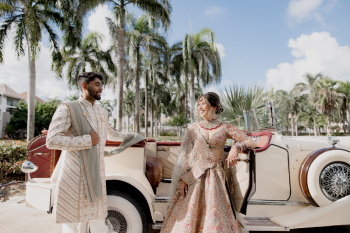
This is the most consequential decision you will make. The right resort can make everything else easier. The wrong one will create problems that no amount of outside coordination can fully fix.
Indian weddings are operationally complex. You need a property with multiple event spaces, because a Sangeet and a reception are very different environments and you cannot host them in the same room back-to-back without significant logistics challenges.
You also need a resort that has genuine experience with South Asian celebrations, meaning they understand the noise levels involved, the length of events, the need for a baraat-friendly arrival space, the requirements for religious ceremonies, and the food considerations for guests who do not eat beef or require vegetarian options throughout the weekend.
Take a look at the resorts our clients love.
A resort that photographs beautifully may still be a poor fit for an Indian destination wedding. Before you book, ask every property these specific questions:
- How many Indian or South Asian weddings have you hosted, and in what size range?
- How many distinct event spaces do you have, and what are the capacities of each?
- Can you accommodate a baraat procession, including live dhol players?
- Do you allow outside vendors, and if so, what are the fees?
- What are your noise ordinances and event end times?
- Are there restrictions on open flames, which matter for certain Hindu ceremonies?
- What indoor backup spaces are available if weather forces a change?
- How do you handle event transitions when multiple events happen in the same day?
All-inclusive resorts offer a significant advantage for Indian destination weddings because they bundle accommodations, meals, and most activities into a per-person cost, which simplifies budgeting and protects guests from unexpected charges throughout the weekend.
Many resorts in Mexico now offer South Asian wedding packages that include event setup, basic decor, catering, and on-site coordination support.
Read the fine print carefully, though. Most packages cover general decor and standard catering. Cultural-specific elements like a floral mandap, specialty lighting, traditional food stations, or religious ceremony props typically carry additional costs.
If you are ready to find your perfect resort, take a look at the many options available in Mexico and the Caribbean.
Step 4: Establish Your Budget and Guest Count Together
Guest count and budget are not two separate conversations. The number of guests you invite determines your room block requirements, your minimum food and beverage spend, your venue needs, and ultimately the shape of your entire wedding week. Getting clarity on both before you negotiate with resorts puts you in a much stronger position.
What you actually spend depends on variables that compound quickly: how many events you host, which resort you choose, the level of decor and entertainment you want, how many outside vendors you bring in, and whether you are hosting 60 guests or 160.
There is no single number that applies to every Indian destination wedding, and any agency or resort that gives you a confident figure before understanding your specifics is guessing.
When you build your initial budget, make sure you account for all of these categories:
- Resort wedding package fees and any per-event surcharges
- Accommodations for you and your guests within the room block
- Outside vendors including decor, photography, entertainment, and your pandit or officiant
- Airport transfers and ground transportation
- Welcome bags, favors, and any hosted guest experiences
- Travel costs for immediate family members you plan to sponsor
- Resort service charges, which typically run 15 to 22 percent on top of all event spend and catch many couples off guard
For a full breakdown of what Indian destination weddings in Mexico actually cost in 2026, including real pricing by wedding size, hidden costs most couples miss, and strategies for stretching your budget further, read our complete guide.
Step 5: Book Your Travel Concierge Early
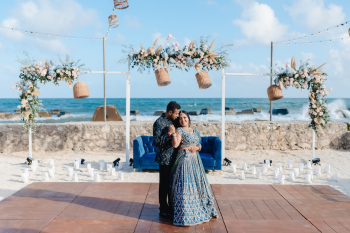
One of the most underestimated aspects of planning an Indian destination wedding is the logistics of getting 150 to 300 people to the same resort on the same weekend.
Couples who manage this themselves frequently run into the same problems: guests booking outside the room block and losing group rates, missing flight connections, arriving on the wrong dates, or finding certain room categories sold out.
Working with a travel concierge who specializes in Indian destination weddings solves this. A good travel partner will:
- Help identify the right resort based on your specific event needs and guest profile
- Negotiate your room block and group rates directly with the property
- Set up a streamlined booking system so guests have one clear way to reserve their rooms
- Handle airport transfers so no one is stranded at baggage claim
- Serve as the logistics point of contact from the moment guests land until they depart
This is especially valuable for guests traveling from India or the UK who may be navigating the booking process in a different time zone and currency.
The earlier you engage a travel concierge, the better. Room blocks at the most popular resorts for Indian weddings fill up fast, and the best properties can book out 12 to 18 months in advance for peak-season weekends.
Step 6: Plan Your Event Lineup and Ceremony Requirements
Most Indian destination weddings span several days, with the full guest experience often running an entire week. The number of events you host across that time depends on your style and how much programming you want to build around the wedding itself. A typical programming schedule might look like this:
Day one usually features a welcome event, which sets the tone for the weekend and gives guests who have just arrived a chance to connect. This works well as a casual poolside or beachfront gathering with cocktails and light food.
Day two typically includes the Mehndi ceremony in the afternoon, transitioning into the Sangeet in the evening. The Mehndi is an intimate event centered on the bride and the women in her family, while the Sangeet is often the most festive event of the weekend, featuring music, dancing, and performances from family members.
For outdoor events in beach destinations, late afternoon start times work well because the heat has usually eased and the lighting is beautiful.
Day three is the main event: the wedding ceremony and reception. Depending on the religion, the ceremony might take place on the beach, in a garden venue, in a ballroom, or under an open-air structure.
The reception follows, typically in the resort’s largest event space. Some couples also host a farewell brunch on the morning after the reception, which gives everyone a relaxed, no-agenda moment before guests begin departing.
It does not need to be elaborate. A reserved section of a poolside restaurant with a few hours together is often all it takes, and guests consistently cite it as one of their favorite parts of the weekend.
When you finalize this lineup with your resort, make sure you discuss setup and teardown times between events. A Sangeet setup looks very different from a ceremony setup, and the resort team needs enough time to transition properly without rushing.
For Hindu weddings, confirm early whether the resort allows you to bring in a pandit, and whether there are any restrictions on fire elements for the wedding ceremony. For Sikh weddings, find out whether the resort can accommodate a Gurdwara setup or a space that treats the Guru Granth Sahib with appropriate reverence.
These are not details to discover the week before your wedding.
Step 7: Manage Guest Travel Like a Professional
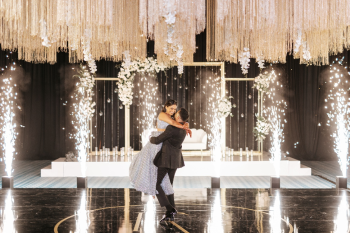
Guest travel management is where many couples lose the most time and energy during the planning process. Done well, it gives your guests a seamless experience. Done poorly, it becomes a customer service operation you run from your phone while also trying to plan your own wedding.
A few practices that make a significant difference:
- Send save-the-dates at least 10 to 12 months before the wedding date. Indian destination weddings require guests to request time off, buy flights, and budget for travel, and they need real lead time to do all of it comfortably.
- Flight timing coordination is underrated and almost always overlooked. When 100 guests are arriving from different cities on different airlines, the airport transfer logistics become genuinely complex. If a significant portion of your guests arrive within the same two-hour window, a single shuttle run handles it efficiently. If arrivals are scattered across twelve hours, transportation costs multiply. A travel concierge monitors arrival times as bookings come in and builds transfer schedules that minimize cost and waiting time for everyone.
- Communicate the room block booking deadline clearly and send reminders at 60 days and again at 30 days before the cutoff. Guests who miss the deadline risk higher rates or finding the resort sold out for certain nights.
- Room blocks are a negotiating asset, not just a hotel booking. When you commit to a certain number of room nights, the resort has revenue certainty, and that gives you leverage. A skilled travel concierge uses your room block to negotiate complimentary event venues, food and beverage credits, room upgrades for the couple, and waived outside vendor fees. Couples who book their room block directly with the resort without a specialist almost never know to ask for these concessions, and resorts almost never volunteer them.
- Resort wedding contracts often include food and beverage minimums, and the details of how those minimums apply, whether per event, per day, or across the full wedding week, vary significantly by property. Couples who sign without fully understanding the terms can find themselves committed to spend levels that do not match their vision for certain events. A travel concierge reads every contract line before you sign and flags these clauses before they become expensive surprises
- Create a WhatsApp group or use a wedding app to post event reminders, resort maps, and real-time updates throughout the wedding weekend. Guests arriving from multiple cities and time zones appreciate having one reliable place to find information.
Step 8: Build Your Vendor Team
Beyond the resort’s in-house team, most Indian destination weddings require a set of outside specialists. Your core vendor team typically includes:
- A travel concierge (also called a travel agency) that specializes in Indian destination weddings in Mexico or the Caribbean
- A dedicated wedding planner with Indian destination wedding experience
- A photographer and videographer who have shot South Asian celebrations specifically
- A decor company familiar with resort environments and cultural elements
- A mehndi artist
- Entertainment: DJ, dhol players, live musicians, and an MC
- A pandit, Qazi, or Granthi depending on your ceremony tradition
- Hair and makeup artists
One thing worth knowing as you build this team: some destination wedding agencies offer bundled services that let you consolidate multiple vendors under one roof.
At Indian Destination Wedding, for example, couples who book travel concierge services can add wedding planning and entertainment options, including a dhol player, DJ, and MC, directly to their package.
The practical benefit of this goes beyond convenience. When your travel concierge, wedding planner, and entertainment team already have established working relationships and shared processes, the coordination friction that typically eats up a couple’s time and energy disappears.
You spend less time playing project manager between vendors who have never worked together, and more time actually enjoying your wedding week.
Beyond your travel concierge, the wedding planner is arguably the most important outside hire you will make.
A planner who knows the destination, has relationships with the local vendor community, and understands Indian wedding traditions will be your primary advocate throughout planning and your logistics manager on the ground during the event weekend.
When you hire photographers and videographers, look specifically at their South Asian wedding portfolio. The movement of a baraat procession, the lighting during a Sangeet, and the emotion of pheras all require a photographer who has shot these moments before.
Before finalizing any outside vendor, confirm with the resort whether they allow that vendor category, what the outside vendor fee is, what time vendors are permitted to arrive for setup, and whether there are any equipment restrictions that affect your entertainment or production plans.
Step 9: Lock In Your Decor Vision and Cultural Details
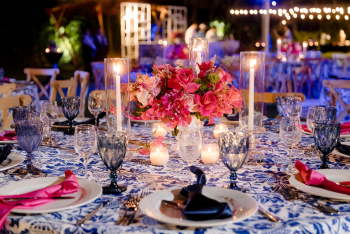
Decor at an Indian destination wedding is not just decoration. It is storytelling. The colors, florals, lighting, and design elements you choose communicate something about who you are as a couple and honor the traditions your families hold dear.
Work with a decor team that has executed Indian weddings in resort environments before. Outdoor events present wind and humidity challenges that affect floral arrangements and fabric draping differently than indoor venues. A good decor team knows how to work with the environment rather than fight it.
Share your inspiration and your outfit details with your decor team early. Many couples coordinate the color palette of each event around the bride’s and groom’s outfits for that event, which creates a cohesive visual story across all your photos and videos.
This level of coordination takes time and requires early communication.
If you plan to incorporate traditional elements like a floral mandap, oil lamps, a doli, or specific religious items, source these well in advance. Some items may need to be shipped to the resort ahead of your arrival, which requires coordination with the resort’s receiving team.
Step 10: Finalize Logistics in the 60 Days Before Your Wedding
The final two months before your wedding are when everything either comes together or starts falling apart. Use this window to:
- Confirm final guest counts with the resort and lock in event menus
- Do a menu tasting if you can manage a site visit or arrange one remotely
- Confirm all vendor arrival and setup times with the resort’s event coordinator
- Arrange airport welcome signage and transportation for arriving guests
- Prepare and ship welcome bags or gift packages for guests’ rooms
- Distribute a clear, day-by-day itinerary to all guests with event times, dress codes, and venue locations within the resort
If a site visit is possible before the wedding week, do it. Walking the actual event spaces in person helps you make better decisions about decor placement, event flow, and guest movement than any photo or floor plan can.
Every successful Indian destination wedding begins with the right decisions made in the right order. If you want a deeper dive into choosing destinations, building your budget, and avoiding common planning mistakes, continue with our Complete Guide to Planning a South Asian Destination Wedding in Mexico and the Caribbean.
How Indian Destination Wedding Helps You Manage All of This
There is a meaningful difference between working with a general travel agent and working with a destination wedding agency like ours that focuses specifically on Indian destination weddings and has specialized travel concierges.
A specialized travel concierge understands the unique requirements of South Asian celebrations, knows which resorts consistently deliver for Indian couples, and brings the vendor relationships and negotiating leverage that come from doing this repeatedly.
At Indian Destination Wedding, we’re an award-winning destination wedding agency for South Asian weddings in Mexico and the Caribbean trusted by both couples and resorts for our hard work and quality results.
We help you identify the right destination and the right resort based on your specific vision, guest count, budget, and ceremony requirements using our signature Resort Match Finder™ process. We then manage all of the group travel logistics, from the room block to airport transfers, so you are not running a travel agency on top of planning your own wedding.
Plus, for couples who want a complete package, you can also add on our wedding planners in addition to entertainment options (such as DJs and dhol players) when you book travel concierge services through us.
The couples we work with consistently tell us that bringing in a team that had done this before was the single best decision they made. Not because planning an Indian destination wedding is impossible on your own, but because having an experienced partner means you spend your engagement celebrating rather than problem-solving.
Frequently Asked Questions About Planning an Indian Destination Wedding in Mexico or the Caribbean
How far in advance should I start planning my Indian destination wedding?
Start at least 12 to 18 months out, especially if you want a peak-season date (November through April) at a resort in Cancun or Riviera Maya. Popular resorts with South Asian wedding packages book up quickly. If your timeline is shorter, 6 to 9 months is workable, but your options for dates, resorts, and preferred vendors will be more limited.
How much does an Indian destination wedding in Mexico typically cost?
Total costs vary widely based on guest count, resort selection, number of events, and decor level.
South Asian wedding packages at top Mexican resorts often start around $50,000 to $100,000 for a smaller group, with all-in costs for a 100 to 200 guest celebration typically ranging from $75,000 to $150,000 or more depending on how elaborate each event is. Larger celebrations with 200+ guests can be an investment of $100,000+.
Compared to a traditional wedding in the U.S. or Canada at similar guest counts, destination weddings frequently offer more for your budget.
Can we have all five events (welcome dinner, Mehndi, Sangeet, ceremony, reception) at an all-inclusive resort?
Yes, and most major resort properties in Cancun and Riviera Maya that specialize in Indian weddings are built to accommodate multi-day programming. The key is confirming that the resort has enough distinct event spaces so each event can have its own setup without logistical conflicts, and that their team has experience transitioning between different event formats efficiently.
Some of our clients spread their events between two sister resorts that lie side by side or have direct access to each other. This allows you to get more value as the number of amenities and restaurants doubles when you book things this way.
What is the best time of year for an Indian destination wedding in Mexico?
November through April is the ideal window. This period falls within Mexico’s dry season, bringing low humidity, consistent sunshine, and comfortable evening temperatures.
December and January are the most popular months, so expect strong demand for both resort dates and vendor availability during those windows. If you have flexibility, February and March offer similar weather with slightly more availability.
Do resorts in Mexico accommodate Hindu, Sikh, and Muslim Indian weddings?
Resorts with South Asian wedding experience generally accommodate all three, but the specifics matter. For Hindu weddings, confirm that outside pandits are permitted and that fire elements are allowed. For Sikh weddings, ensure the resort can set up a space that appropriately honors the Guru Granth Sahib. For Muslim weddings, verify halal catering options and the availability of a Qazi or officiant. These details should be part of your initial resort vetting conversations.
How do we manage travel for 100 or more guests coming from different cities?
A good approach is working with a travel concierge who sets up a group booking platform or dedicated booking contact for your guests. This creates a single, consistent experience regardless of where each guest is traveling from, ensures everyone is placed within your room block, and gives you visibility into who has booked and who still needs assistance.
Sending save-the-dates 12 months in advance and a room block deadline reminder at 60 and 30 days out dramatically improves booking rates.
An even better approach? Working with a full destination wedding agency like ours that has a travel concierge division but also offers wedding planners and entertainment options. That allows your travel team work hand-in-hand with your wedding planner perfectly because they all work under one source.
Do we need to get legally married in Mexico, or can we do a symbolic ceremony?
Many Indian couples who marry at a destination resort choose to legally marry in their home country before or after the destination wedding, and hold a symbolic ceremony at the resort.
Legal marriage in Mexico requires civil documentation and advance preparation. If a legal ceremony in Mexico is important to you, work with your resort’s wedding coordinator or a local wedding planner to understand the civil registry requirements, which typically include submitting documents several weeks in advance.
What should we look for in a resort when hosting a baraat procession?
Look for a resort with a main entrance or arrival pathway that can accommodate a procession, outdoor space for a dhol player and musicians, and staff who are familiar with the baraat tradition and know not to interrupt or redirect it.
Ask whether the resort has hosted baraats before and what the typical route looks like. Some resorts are better configured for this than others, and it is a detail worth confirming before you sign any contracts.
Is it worth hiring an outside wedding planner if the resort already has a coordinator?
Yes, in most cases. A resort coordinator manages the resort’s role in your wedding. An outside wedding planner manages everything else: vendor coordination, timeline creation, your personal experience on the day, and advocacy if something goes wrong. For an Indian destination wedding with multiple events, cultural traditions, and a large guest list, having a dedicated planner who is focused entirely on your celebration rather than the resort’s overall operations is well worth the investment.
That is why our agency also includes the option to work with one of our wedding planners that specialize in Indian destination weddings in Mexico or the Caribbean.
How many days should an Indian destination wedding last?
Indian destination weddings commonly run anywhere from three to seven days, with many couples and their guests spending a full week at the resort.
A typical structure includes a welcome event, Mehndi, Sangeet, ceremony, and reception, with an optional farewell brunch on the morning of departure. Some couples add group excursions, pool parties, or extended welcome programming depending on their guest count, style, and budget.
The beauty of a destination wedding is that the resort itself becomes part of the experience, so guests who arrive a day or two early or stay a day or two after have plenty to enjoy.
Can Indian Destination Wedding help with both travel and wedding planning?
Yes. Our destination wedding agency offers a full suite of services for weddings that fit together perfectly. We handle your travel logistics, including destination and resort selection, room block management, guest booking coordination, and airport transfers.
You can also include wedding planning and entertainment options, creating one cohesive team managing the full experience rather than separate vendors working in silos.
Photo credits: Paper Boys Weddings, Mexican Wedding Photos, Sara Idrees and Ruben Chan
Why Choose Indian Destination Wedding
Ready to plan your South Asian wedding in Mexico or the Caribbean? We’ll help you find the right resort for you and bring together all the travel details for you and your guests. And we’ll even connect you with vendors that specialize in South Asian weddings so you can shorten your wedding to-do list.
Please visit our Frequently Asked Questions page, and our summary of average South Asian destination wedding costs.
Learn about different destinations and resorts that have the best perks for South Asian weddings by contacting us online or call at 888-485-0005.